Blog · Basics
Dysbiosis in dogs: causes, signs and what to do
Dysbiosis in dogs is an imbalance of gut bacteria, not a disease. A stool analysis detects it. The cause is treated, there is no universal way to restore it.
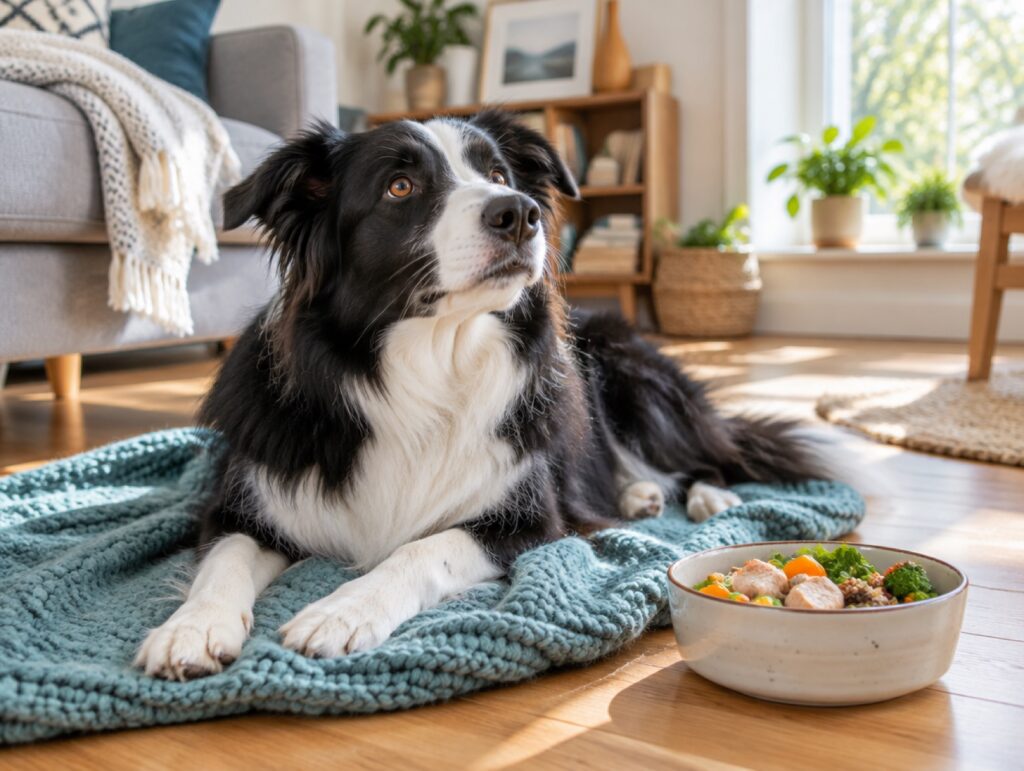
Did your vet give you a result with the phrase “gut dysbiosis” and you do not know whether it is a diagnosis or just a nice-sounding word? Or is normal poop refusing to come back after antibiotics and you are looking for what is going on in the gut? Dysbiosis in dogs is an imbalance of gut bacteria that changes what they do in the tummy. It is not a disease in its own right, but a finding that can accompany a range of problems. Here you will find what causes it, how it is recognised and what you can realistically do, and what your vet does.
- Dysbiosis in dogs is a change in the composition of gut bacteria that leads to a change in what the bacteria in the gut do (Pilla and Suchodolski, 2020).
- The best-described triggers include antibiotics, acute diarrhoea, chronic gut diseases and exocrine pancreatic insufficiency (EPI).
- Dysbiosis itself has no one typical sign. It may come with loose stool, vomiting or weight loss, but those have many other causes.
- The Dysbiosis Index test measures 8 bacterial targets in stool. It does not diagnose a disease, it only shows how much a sample differs from healthy dogs.
- There is no single universal procedure that would reliably return gut bacteria to normal. The basis is to find and address the cause with your vet.
What is dysbiosis in dogs?
Dysbiosis in dogs is a change in the composition of the gut microbiome that leads to functional changes: the bacteria start producing different substances and performing different tasks than in a healthy gut (Pilla and Suchodolski, 2020). The word dysbacteriosis is sometimes used too; in everyday owner language it means more or less the same thing: a disturbed gut flora in the dog.
A healthy canine gut is home to an enormous number of bacteria that help digest food, produce short-chain fatty acids and take part in processing bile acids. You can find an introduction to the topic in the article Dog gut microbiome: what it is and why it matters. In dysbiosis this state changes. Studies in dogs with chronic gut problems tend to show fewer bacteria such as Faecalibacterium, Fusobacterium or Clostridium hiranonis, and more Escherichia coli and streptococci (Pilla and Suchodolski, 2020).
The important point is that “dysbiosis” describes what is happening with the bacteria, not why. It is more a finding than a diagnosis, and the vet always asks what is behind it.
What causes dysbiosis in dogs?
Dysbiosis in dogs usually accompanies another problem or arises as its consequence: antibiotics, acute diarrhoea, chronic gut disease or pancreatic disease. Exactly why one dog has a different microbiome from another is covered in the article Why every dog has a different microbiome.
| Cause or trigger | What we know | Source |
|---|---|---|
| Antibiotics | Broad-spectrum antibiotics quickly reduce bacterial diversity. After they are stopped, many species return. According to the review, a full return to the original composition is rare, but this conclusion rests mainly on data from humans and mice. | Pilla and Suchodolski, 2020 |
| Metronidazole | In a study of 24 healthy dogs, metronidazole given for 14 days reduced diversity and raised the Dysbiosis Index. Both returned within 2 weeks of stopping, but Fusobacteria, and in 7 of 16 dogs also Clostridium hiranonis, had still not fully recovered after 4 weeks. | Pilla et al., 2020 |
| Amoxicillin with clavulanate | In 16 dogs with acute diarrhoea it did not improve the clinical condition compared with placebo and the Dysbiosis Index did not differ, but the share of resistant E. coli strains rose. | Werner et al., 2020 |
| Acute diarrhoea | Of all the groups studied, dogs with acute diarrhoea, especially bloody, had the most markedly altered microbiome, more than dogs with inflammatory bowel disease. | Suchodolski et al., 2012 |
| Chronic enteropathy | A Dysbiosis Index above 0 was found in 74% of dogs with chronic gut inflammation, but only 5% of healthy dogs. | AlShawaqfeh et al., 2017 |
| Exocrine pancreatic insufficiency (EPI) | Dogs with EPI have a higher Dysbiosis Index than healthy dogs, more E. coli and less Clostridium hiranonis. | Blake et al., 2019 |
Antibiotics and dysbiosis: what happens in the gut
Antibiotics affect not only the cause of the infection but also beneficial gut bacteria. In 24 healthy dogs, metronidazole reduced bacterial diversity and the representation of key groups such as Fusobacteria. Diversity returned within two weeks of stopping, but Fusobacteria, and in some dogs also Clostridium hiranonis, were not fully back to normal even four weeks after stopping (Pilla et al., 2020). For amoxicillin with clavulanate, a study of 16 dogs found that in uncomplicated acute diarrhoea the drug brought no clinical benefit. In addition, the share of resistant E. coli strains rose during treatment to a median of 100% and was still raised three weeks after treatment (Werner et al., 2020).
This is not to say antibiotics are bad. When a dog really needs them, they are necessary. The point is that it makes sense to give them only on your vet’s recommendation. How to help the gut after treatment is summed up in the article Dog after antibiotics.
Diet, stress and other influences
The composition of the food changes a dog’s microbiome: dogs on a raw diet tend to have different bacterial representation from dogs on kibble. The review reads this more as an adaptation of the microbiome to a long-term diet than as a disease (Pilla and Suchodolski, 2020). Stress and a sudden change of food are common triggers of diarrhoea, and the gut responds to them, as described in the articles Stress diarrhoea in dogs and Switching dog food.
How does dysbiosis show in a dog?
Dysbiosis in dogs has no sign of its own. What you see are the signs of the underlying problem, most often problems of the digestive tract. Typically these are loose stool, repeated or alternating diarrhoea, gas, vomiting, weight loss or worse appetite.
Dozens of other causes produce the same signs, from parasites to food intolerance, so dysbiosis cannot be recognised from them. You can find more on the individual problems in the articles Digestive problems in dogs, Diarrhoea in dogs or Gas in dogs. If they last longer than 2 to 3 weeks or keep coming back, they belong with the vet, even if your dog is otherwise lively.
How is dysbiosis in dogs detected?
Dysbiosis is detected by analysing a stool sample, most often by qPCR, from which the Dysbiosis Index is calculated. It is a score developed at Texas A&M University and first described in 2017 (AlShawaqfeh et al., 2017).
The Dysbiosis Index measures the amount of total bacteria and seven groups: Faecalibacterium, Turicibacter, Escherichia coli, Streptococcus, Blautia, Fusobacterium and Clostridium hiranonis. Negative values mean a normal microbiome and positive values dysbiosis, and the higher the number, the more the sample differs from a healthy one. Values from 0 to 2 are borderline and mean a mild shift, while a value above 2 is considered dysbiosis (Suchodolski, 2021).
The second option is sequencing, which describes the diversity and representation of bacteria. On its own, though, it does not say whether a finding is a disease or a normal deviation, and the interpretation depends on the laboratory. You can find what such a report looks like in the article Dog microbiome analysis.
What a dysbiosis test cannot do
The Dysbiosis Index does not diagnose a specific disease. In a study of 95 healthy dogs and 106 dogs with chronic gut inflammation, it distinguished the two groups at a cut-off of 0 with a sensitivity of 74% and a specificity of 95% (AlShawaqfeh et al., 2017). That means roughly a quarter of dogs with chronic gut inflammation had an index below zero, that is, in the normal range. Another, smaller study found a similar picture: 82% of healthy dogs had a Dysbiosis Index below zero, but so did 36% of dogs with chronic enteropathy (Blake et al., 2019).
With puppies, extra caution is needed. Puppies up to 5 to 6 weeks old had a median index of 5.39 compared with −4.62 in adult dogs, so the authors state that puppies under 6 weeks may need a different cut-off for interpreting the index (Blake et al., 2020). The index is therefore useful mainly as a basis for a conversation with your vet and for tracking changes over time, not as a verdict on its own.
| Shows | Does not show |
|---|---|
| How much the composition of bacteria in the sample differs from healthy dogs | A specific diagnosis or the cause of the problems |
| Which of the monitored groups of bacteria are low or high | Whether the dog needs medicines, a diet, or just time |
| A change between two samples over time | A reliable value in puppies under 6 weeks |
What does the vet do when dysbiosis is suspected?
The vet first looks for the cause, not for dysbiosis itself. They ask about signs, feeding and treatment so far, and your dog goes through an examination and, as needed, blood tests, a stool examination for parasites or imaging. For long-term problems the vet may choose an elimination diet, treat a specific disease such as EPI, or start a work-up for chronic enteropathy.
The vet will often not prescribe antibiotics for uncomplicated acute diarrhoea. The meta-analysis behind the recommendations of the European ENOVAT network found, with a high certainty of evidence, that they do not help in a clinically significant way in mild to moderate acute diarrhoea (Scahill et al., 2024). The article Diarrhoea in dogs goes into this in more detail.
Faecal transplantation has been talked about a lot lately. For dogs, though, according to a 2020 review there were no controlled studies, only isolated small studies and case reports with different procedures (Pilla and Suchodolski, 2020). It is a procedure for specialist centres, not for trying at home.
How do you restore a dog’s microbiome? What you can do
How to restore a dog’s microbiome depends mainly on the cause, which is why the first step always belongs to the vet. There is no single universal procedure that would reliably return gut bacteria to normal. But you can create conditions for the gut to settle.
- Find the cause. If the problems last longer than 2 to 3 weeks or keep coming back, book your dog for an examination.
- Keep feeding steady. Do not change the food without a reason, and when you must change it, do it gradually following a 7 to 10 day plan.
- Keep a stool diary. Write down the date, what the poop looks like and what your dog ate. It is more useful to your vet than memory. The article Dog poop: colour, shape and consistency gives guidance.
- Discuss fibre with your vet. Fibre is food for gut bacteria, but leave the amount and type to your vet, especially with diarrhoea. You can find more in the article Fibre for dogs.
- Consider probiotics only after advice. The meta-analysis behind the ENOVAT recommendations did not show a clinically significant shortening of acute diarrhoea with prebiotics, probiotics or synbiotics, and the certainty of evidence was very low to moderate (Scahill et al., 2024). How to choose is described in Probiotics for dogs.
- Do not try human supplements and medicines. What is ordinary for a person can harm a dog.
- After antibiotics, give the gut time. Recovery takes weeks, not days. In the metronidazole study, some of the bacteria were not back to normal even 4 weeks after stopping (Pilla et al., 2020).
Frequently asked questions
What is dysbiosis in dogs and is it dangerous?
Dysbiosis in dogs is a change in the composition of gut bacteria that alters their functions. On its own it is not a diagnosis but a finding that can accompany diarrhoea, chronic gut inflammation or pancreatic disease. The underlying disease is more dangerous, which is why it is important to find the cause with your vet.
How can I tell my dog has dysbiosis?
You cannot tell from the signs, because loose stool, gas or vomiting have many different causes, from parasites to food intolerance. Dysbiosis is detected by analysing stool, for example with the Dysbiosis Index. If the problems last longer than 2 to 3 weeks or keep coming back, have your dog examined.
Can an antibiotic cause dysbiosis?
Yes, antibiotics can change the microbiome considerably for a time. In healthy dogs metronidazole reduced bacterial diversity. It returned within 2 weeks of stopping, but some groups of bacteria were not back to normal even after 4 weeks (Pilla et al., 2020). Never stop antibiotics on your own. If the course of treatment worries you, call your vet and agree on the next step.
How long does it take for a dog’s microbiome to recover?
There is no general time. After metronidazole, some groups of bacteria in a study of healthy dogs were not back to normal even after 4 weeks (Pilla et al., 2020). A full return to the original composition is rare according to the review (based on data from humans and mice; Pilla and Suchodolski, 2020). It depends on the dog and the drug. Watch the stool and if in doubt, consult your vet.
Will probiotics help with dysbiosis in dogs?
It is not certain and the evidence is so far limited. The meta-analysis behind the ENOVAT recommendations did not show a clinically significant shortening of acute diarrhoea with prebiotics, probiotics or synbiotics. None of the included studies reported adverse effects, though (Scahill et al., 2024). Leave whether to give them, and which, to your vet, especially with a puppy or a sick dog.
Is dysbiosis the same thing as dysbacteriosis?
In everyday language, yes. Both words mean an imbalance of gut bacteria, and in this article we use them the same way. In professional texts the term dysbiosis is now more common, which is why you find it in the heading, in the studies and in the description of stool analysis results.
Sources
- Pilla R, Suchodolski JS (2020). The Role of the Canine Gut Microbiome and Metabolome in Health and Gastrointestinal Disease. Frontiers in Veterinary Science. doi.org/10.3389/fvets.2019.00498
- AlShawaqfeh MK et al. (2017). A dysbiosis index to assess microbial changes in fecal samples of dogs with chronic inflammatory enteropathy. FEMS Microbiology Ecology. doi.org/10.1093/femsec/fix136
- Pilla R et al. (2020). Effects of metronidazole on the fecal microbiome and metabolome in healthy dogs. Journal of Veterinary Internal Medicine. doi.org/10.1111/jvim.15871
- Werner M et al. (2020). Effect of amoxicillin-clavulanic acid on clinical scores, intestinal microbiome, and amoxicillin-resistant Escherichia coli in dogs with uncomplicated acute diarrhea. Journal of Veterinary Internal Medicine. doi.org/10.1111/jvim.15775
- Blake AB et al. (2019). Altered microbiota, fecal lactate, and fecal bile acids in dogs with gastrointestinal disease. PLOS ONE. doi.org/10.1371/journal.pone.0224454
- Blake AB et al. (2020). Developmental stages in microbiota, bile acids, and clostridial species in healthy puppies. Journal of Veterinary Internal Medicine. doi.org/10.1111/jvim.15928
- Suchodolski JS et al. (2012). The fecal microbiome in dogs with acute diarrhea and idiopathic inflammatory bowel disease. PLoS ONE. doi.org/10.1371/journal.pone.0051907
- Scahill K et al. (2024). Efficacy of antimicrobial and nutraceutical treatment for canine acute diarrhoea: A systematic review and meta-analysis for ENOVAT guidelines. The Veterinary Journal. doi.org/10.1016/j.tvjl.2023.106054
- Suchodolski JS (2021). Analysis of the gut microbiome in dogs and cats. Veterinary Clinical Pathology 50(S1):6–17. doi.org/10.1111/vcp.13031
This article is educational and does not replace a veterinary examination. If you are not sure, ask your vet.
This article was proofread with the help of AI. This is a translation from Czech, so it may contain inaccuracies.