Blog · Digestion
Dog after antibiotics: diarrhoea, probiotics, gut recovery
Dog has diarrhoea after antibiotics? It is common, and the gut needs weeks, not days. Finish the course, keep food stable, ask your vet about probiotics.
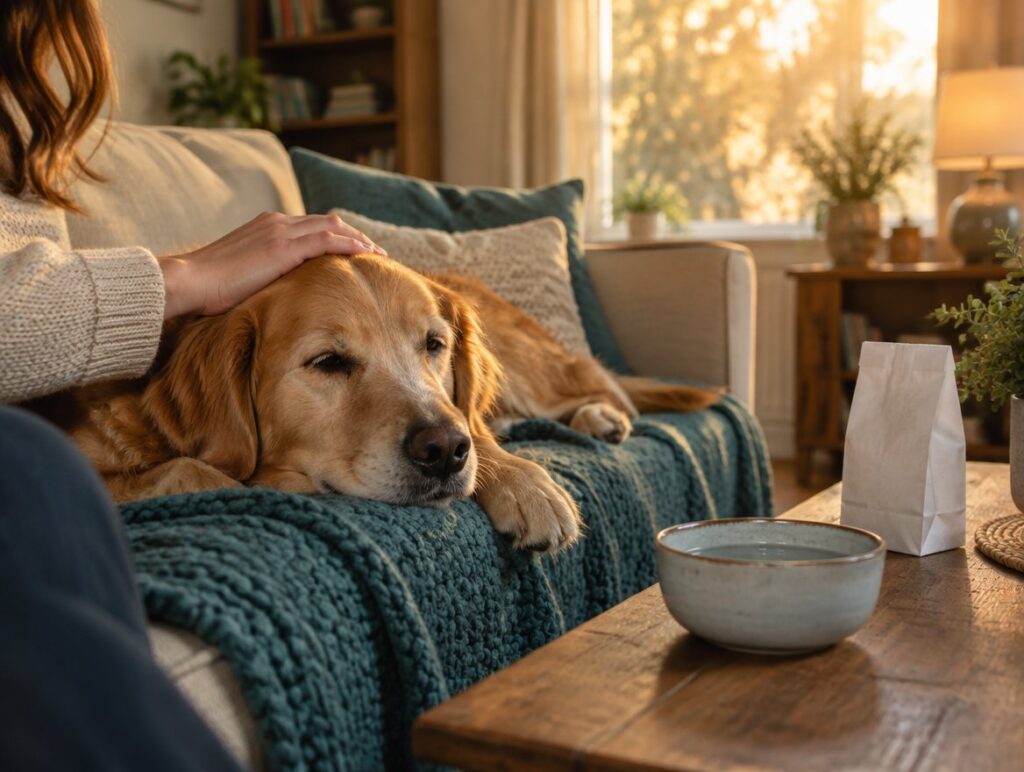
It is six in the morning and your dog is looking at you by the door in a way that tells you this is not going to be a calm walk. The antibiotics are finished, but the tummy is still not cooperating. You are not doing anything wrong.
Your vet prescribed the antibiotics and was right to, because they are irreplaceable for bacterial infections. But they hit not only the bacteria causing the illness but also the bacteria in the gut. Here you will find out why a dog can have diarrhoea after antibiotics, how long recovery takes according to studies, what you can do, when probiotics for a dog after antibiotics come into play and one surprising finding about antibiotics “just in case”.
- Antibiotics cannot tell beneficial bacteria from harmful ones, so they also affect your dog’s gut microbiome, the community of bacteria that helps with digestion.
- In 16 healthy dogs after 14 days of metronidazole, the overall composition of bacteria had still not fully returned 4 weeks after stopping, and in 7 of them the conversion of bile acids remained disrupted (Pilla et al., 2020).
- Soft stool, vomiting and a reduced appetite are common with some antibiotics: in one study in which 22 healthy dogs received a combination of two antibiotics, all of them had diarrhoea (Whittemore et al., 2019).
- What helps most is finishing the course as your vet directs, keeping the food the same and watching water intake.
- Whether your dog needs a probiotic after antibiotics is something to decide with your vet.
What do antibiotics do to a dog’s gut?
Antibiotics suppress bacteria regardless of whether they are harmful or beneficial, which is why the diversity of bacteria in a dog’s gut drops after them. The canine gut microbiome is a large community of bacteria that helps digest food and keeps in check whatever does not belong there. When its balance is disturbed, it is called dysbiosis, an imbalance of gut bacteria.
Bacteria in the gut have specific jobs: Clostridium hiranonis, for example, converts primary bile acids into secondary ones (Manchester et al., 2019; Pilla et al., 2020). When an antibiotic suppresses such bacteria, it changes not only which bacteria are present but also the substances the gut uses.
The change in the gut is a direct result of the medicine, not your fault.
How long does it take a dog’s gut to settle after antibiotics?
Gut bacteria recover over weeks, not days, and differently in every dog. In studies of healthy dogs, the overall composition of bacteria had not fully returned even 4 weeks after stopping metronidazole, and after a combination of two antibiotics the recovery was not complete even 8 weeks after treatment.
| Antibiotic | Dogs | What the researchers found | Study |
|---|---|---|---|
| Tylosin, 7 days | 8 healthy dogs on tylosin (8 on placebo) | Bacterial diversity returned 2 months after stopping, but according to one analysis the composition still differed, Faecalibacterium and Turicibacter remained reduced and primary bile acids were still elevated. | Manchester et al., 2019 |
| Metronidazole, 14 days | 16 healthy dogs on metronidazole (8 controls) | Bacterial richness and the dysbiosis index returned, the overall composition had not fully returned even 4 weeks after stopping, and in 7 of 16 dogs the conversion of bile acids remained disrupted. | Pilla et al., 2020 |
| Enrofloxacin with metronidazole, 21 days | 22 healthy dogs | Changes in a number of bacteria and their products persisted even 8 weeks after treatment. The overall composition and the dysbiosis index returned only in the group on a synbiotic. | Whittemore et al., 2021 |
| Amoxicillin with clavulanic acid, 7 days | 8 dogs with acute diarrhoea on the antibiotic (8 on placebo) | The share of intestinal E. coli resistant to amoxicillin was still raised 3 weeks after treatment. | Werner et al., 2020 |
These are small studies, mostly of healthy dogs. They involve specific drugs, and a sick dog on a different antibiotic may respond differently. So keep an eye on the tummy for weeks after the last tablet.
Is it normal for a dog to have soft poop after antibiotics?
Soft stool, vomiting and a reduced appetite are common during antibiotics, but if they last longer than 24 to 48 hours or get worse, contact your vet.
- 100%In the first treatment period (3 weeks of enrofloxacin with metronidazole), all 22 healthy dogs had diarrhoea, 77% vomited and 41% ate less than half of the usual amount on at least one day.22 dogs, Whittemore et al., 2019
- unchangedstool in healthy dogs after 7 days of tylosin, even though the bacteria in the gut had changed.8 dogs on tylosin, Manchester et al., 2019
So the poop does not reveal everything: it can look fine while the bacteria are still recovering. You can find out how to read it in the articles on dog stool and on soft stool.
Why does a dog’s microbiome recover differently in every dog after antibiotics?
A dog’s microbiome recovers at a different speed in every dog after antibiotics, and scientists have not yet explained exactly why. But studies have described the differences between dogs repeatedly.
In the tylosin study, the authors reported that the degree of recovery varied from dog to dog (Manchester et al., 2019).
With metronidazole, in 7 of 16 dogs the bacterium Clostridium hiranonis had not returned in sufficient numbers even 4 weeks after stopping, and neither had the conversion of bile acids. Interestingly, only 3 of these 7 dogs had diarrhoea during treatment (Pilla et al., 2020). So in this small study, diarrhoea during treatment did not predict how the gut would recover.
So do not compare your dog with the neighbours’ dog, and keep a calm routine even after the poop looks fine.
How can you recognise side effects of antibiotics in a dog?
The most common side effects of antibiotics in dogs are digestive: diarrhoea, vomiting and a weaker appetite. Problems that last longer, get worse or are joined by blood, lethargy or fever are warning signs. What to do when diarrhoea does not pass is described in the article Diarrhoea in dogs: what to do and when to see a vet.
In 9 of 16 dogs (56%), diarrhoea appeared during 14 days of metronidazole and cleared up within 2 to 3 days of stopping (Pilla et al., 2020). But the illness for which your dog received the antibiotics can cause similar problems, so do not automatically blame them on the drug alone.
| Area | Common symptom: watch and note it down | Warning symptom: contact your vet |
|---|---|---|
| Stool | Softer poop or a short bout of diarrhoea that is not getting worse | Diarrhoea lasting longer than 24 to 48 hours, blood, black tarry stool |
| Vomiting | Occasional vomiting without other problems | Repeated vomiting, vomiting blood, your dog cannot keep water down |
| Appetite | Eats a little less but still drinks | Refuses food for more than 24 hours |
| Energy | Slightly more tired | Lethargy, fever, pale gums |
| Walking and nerves | No change | Staggering, tremors, seizures, twitching eyes: go to the vet straight away |
| Skin and breathing | No change | Swollen face, hives, difficulty breathing: go to the vet straight away |
If you are not sure, call the clinic and describe what you see. Notes from the last few days will help with that.
What can you do for your dog’s tummy after antibiotics?
What helps most is following the treatment exactly as your vet directs, keeping the food the same, watching water intake and keeping track of what is happening in the stool.
- Follow the treatment exactly. For the whole prescribed period and at the same time of day. Do not stop or shorten it, even if your dog is lively again. If there are side effects, call your vet.
- Keep the food stable. No new food or treats. If your vet recommends a diet food, switch to it gradually, as they advise.
- Watch water intake. With diarrhoea or vomiting your dog loses fluids, so keep the bowl full at all times.
- Give your dog rest and a regular routine. No demanding training until digestion has settled.
- Keep notes. Stool, appetite and energy every day, and feel free to take a photo of the poop.
- Ask about fibre. Fibre is food for gut bacteria. Whether to adjust the amount of fibre after treatment is something to decide with your vet.
What plan to follow in the weeks after the last tablet?
After the last tablet, keep a stable routine for several weeks and keep notes, because in studies the bacteria had not fully returned to their original state even 4 to 8 weeks after the end of treatment. The plan is only a rough guide, it contains no doses, and your vet will adjust it.
- Last day of treatment. Give the last tablet as your vet instructs and note down stool, appetite, water intake and energy.
- Weeks 1 to 2. The same food, the same times and calm walks. The poop may still be softer, so watch mainly the direction: better, the same or worse.
- Weeks 3 to 4. Go back to normal walks. Leave new treats and food changes alone for now: in the metronidazole study the composition of bacteria had not fully returned even 4 weeks after stopping.
- Weeks 5 to 8. If you need to change the food, do it gradually. Resume more demanding training after agreeing it with your vet.
- After 2 months. Go through your notes. If problems keep coming back or persist, take your dog for a check-up.
Should dogs get probiotics after antibiotics?
Probiotics may be suitable after antibiotics, but whether your dog needs them, which product made for dogs to choose and when to give it is something to decide with your vet. Do not give your dog human probiotics.
In a study of 22 healthy dogs that received enrofloxacin with metronidazole for 3 weeks, the dogs given a synbiotic (a mixture of live bacteria and substances that gut microbes use) an hour after the antibiotic had smaller fluctuations in the amount of food eaten than the dogs on placebo. The synbiotic did not demonstrably affect how many dogs vomited or had diarrhoea (Whittemore et al., 2019). In a follow-up analysis, 8 weeks after treatment the overall composition of bacteria and the dysbiosis index had returned to the starting state in the dogs given the synbiotic, but not in the dogs on placebo. The diversity of bacteria, however, remained lower in both groups (Whittemore et al., 2021). It was a small study of healthy dogs with a single product, and the follow-up analysis was funded by its manufacturer. The result therefore does not apply to every probiotic.
You can find a general overview in the article Probiotics for dogs: what they are and how to choose. We go into detail on what to look for when choosing a product for a dog after antibiotics in the article Probiotics for dogs after antibiotics: what studies say.
Why not ask for antibiotics “just in case” for every bout of diarrhoea?
In uncomplicated acute diarrhoea, dogs given an antibiotic did not recover faster than dogs given a placebo, but they had more resistant E. coli.
In a study of 16 dogs with acute diarrhoea, all of them had a normal clinical score again within 1 to 6 days, whether they received amoxicillin with clavulanic acid for 7 days or a placebo. But the share of resistant E. coli in the antibiotic group was still raised 3 weeks after treatment (Werner et al., 2020).
Your vet decides about antibiotics, so do not ask for them just in case. If they prescribe one, finish the whole course.
When should you see a vet with a dog after antibiotics?
- blood in the stool or black, tarry stool,
- diarrhoea that lasts longer than 24 to 48 hours or gets worse,
- repeated vomiting, vomiting blood, or your dog cannot keep water down,
- a hard, swollen belly, unsuccessful attempts to vomit or drooling,
- a swollen face, hives or difficulty breathing,
- staggering, tremors, seizures or twitching eyes (a known side effect of metronidazole, VCA),
- lethargy, fever or refusing food for more than 24 hours,
- any digestive problems in a puppy, an older dog or a dog with a chronic illness.
What to take away and what to do today
A dog’s gut needs weeks, not days, after antibiotics, so finish the treatment, keep the food the same and keep an eye on the poop. This evening, start a log of stool, appetite and energy. You can find out more about gut bacteria in the article Dog gut microbiome: what it is and why it matters. Save this article for later.
Frequently asked questions
How long does it take a dog’s gut to recover after antibiotics?
In healthy dogs in studies, recovery took weeks: after metronidazole, the composition of bacteria had not fully returned even 4 weeks after stopping, and in 7 of 16 dogs the conversion of bile acids remained disrupted. After a combination of two antibiotics, recovery was not complete even after 8 weeks. The pace is different for every dog.
My dog has diarrhoea or still has loose poop after antibiotics. Is that normal?
Digestive problems are common during antibiotics, and in a study of 22 healthy dogs on a combination of two antibiotics, all of them had diarrhoea. But if the diarrhoea lasts longer than 24 to 48 hours, gets worse, contains blood or your dog is lethargic, contact your vet. With puppies, do not wait.
Can I stop the antibiotics if my dog feels better?
No. Give the antibiotics for exactly as long as your vet directed, even if your dog is lively again and eating well, otherwise the infection may not be fully treated. If there are side effects, do not stop the medicine yourself, but call your vet and describe what you see. Only your vet decides on changing or ending treatment.
Which probiotics are suitable for a dog after antibiotics?
Only products made for dogs are suitable, with the exact strain name and the number of live bacteria on the label. The amount for your dog’s weight is set by the label of the specific product. Whether to use a probiotic after antibiotics at all, which product to choose and when to give it is something to decide with your vet. You can find the details in the article Probiotics for dogs after antibiotics: what studies say.
Can I give my dog a human probiotic after antibiotics?
No. Human products are not made for dogs and may have a different composition. Whether your dog needs a probiotic after antibiotics, which product made for dogs is suitable and when to give it is something to decide with your vet. You can find a general overview in the article on probiotics for dogs.
Can gut recovery after antibiotics be sped up?
There are no proven shortcuts so far. In one small study of healthy dogs, the overall composition of bacteria returned in dogs given a synbiotic, but the diversity of bacteria remained lower even in these dogs. The best approach is a stable routine and a talk with your vet about whether a probiotic for dogs makes sense. Do not try any supplements on your own.
How do I know the gut microbiome has settled?
You cannot tell for certain from the poop. You can watch the stool and appetite, but the bacteria can still be changing even if the stool looks normal. A stool analysis shows the current composition of bacteria, but it is not a diagnosis, so take the result to your vet and have it assessed together with how your dog is doing.
Sources
- Manchester AC et al. (2019). Long-term impact of tylosin on fecal microbiota and fecal bile acids of healthy dogs. Journal of Veterinary Internal Medicine 33(6):2605–2617. doi.org/10.1111/jvim.15635
- Pilla R et al. (2020). Effects of metronidazole on the fecal microbiome and metabolome in healthy dogs. Journal of Veterinary Internal Medicine 34(5):1853–1866. doi.org/10.1111/jvim.15871
- Werner M et al. (2020). Effect of amoxicillin-clavulanic acid on clinical scores, intestinal microbiome, and amoxicillin-resistant Escherichia coli in dogs with uncomplicated acute diarrhea. Journal of Veterinary Internal Medicine 34(3):1166–1176. doi.org/10.1111/jvim.15775
- Whittemore JC et al. (2019). Randomized, controlled, crossover trial of prevention of antibiotic-induced gastrointestinal signs using a synbiotic mixture in healthy research dogs. Journal of Veterinary Internal Medicine 33(4):1619–1626. doi.org/10.1111/jvim.15553
- Whittemore JC et al. (2021). Effects of synbiotics on the fecal microbiome and metabolomic profiles of healthy research dogs administered antibiotics: a randomized, controlled trial. Frontiers in Veterinary Science 8:665713. doi.org/10.3389/fvets.2021.665713
- VCA Animal Hospitals. Metronidazole. vcahospitals.com
This article is educational and does not replace a veterinary examination. If you are not sure, ask your vet.
This article was proofread with the help of AI. This is a translation from Czech, so it may contain inaccuracies.