Blog · Digestion
Greasy stool in dogs: causes, EPI and when to see a vet
Greasy stool in dogs is pale, shiny and sticky. It can be a fatty meal, but also a lack of pancreatic enzymes (EPI). Learn the difference and when to see a vet.
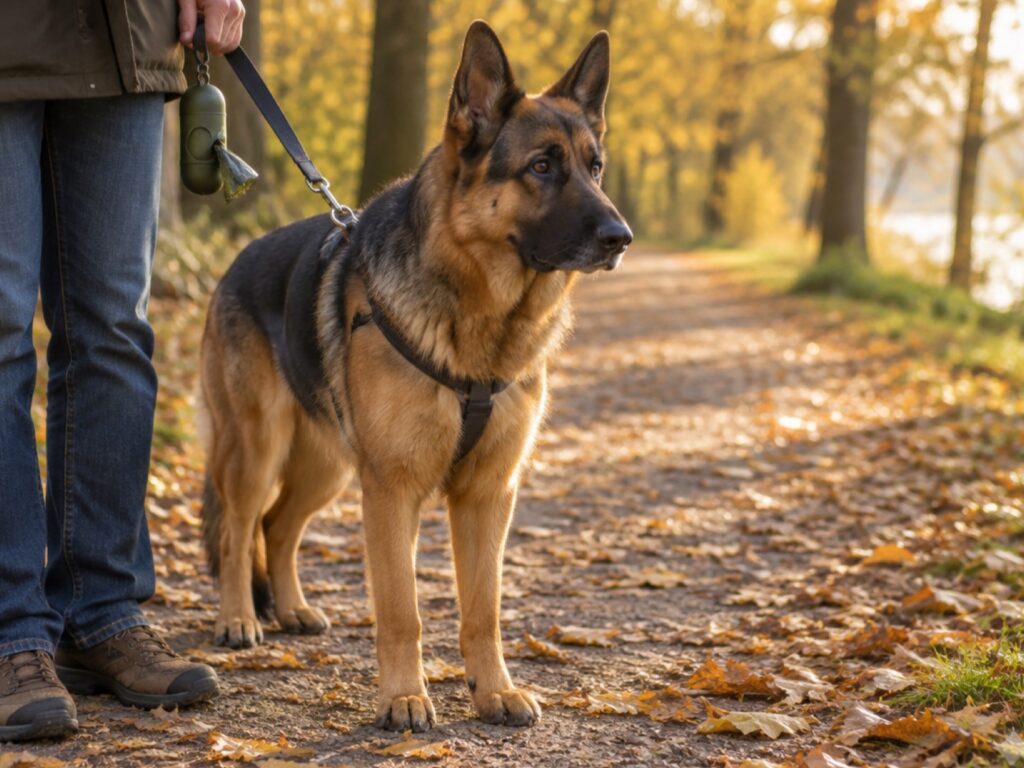
You glance back on a walk and something does not look right. The poop is pale, shiny, sticky and leaves a greasy stain behind. Or it is one big pile after another and your dog is losing weight even though he eats for two. Greasy stool in dogs sounds harmless, but sometimes it is the first visible sign that fat is not being digested or absorbed properly. I will show you how to recognise it, what is behind it and when not to wait.
- Greasy stool in dogs is pale, shiny or sticky, often bulky and smelly. The medical term is steatorrhoea.
- A one-off episode can be caused by a fatty meal, table scraps or a lot of oil in the bowl. If it keeps coming back or lasts, your dog belongs at the vet.
- A serious cause is poor digestion of fat (a lack of enzymes from the pancreas, EPI) or poor absorption in the gut.
- Bulky pale stool, great hunger and weight loss together are a reason to see a vet. With vomiting and belly pain, do not wait.
What does greasy stool in dogs look like?
Greasy stool in dogs tends to be pale to greyish brown or yellowish, with a shiny surface and a sticky, mushy consistency. It leaves a greasy trail on grass or pavement, is hard to pick up and smells worse than usual. There is often more of it than before. For dogs lacking digestive enzymes from the pancreas, the Merck Veterinary Manual describes the stool as typically pale, loose and bulky, sometimes smelly.
You can find what normal stool looks like in the article Dog poop: what colour, shape and consistency reveal. It differs from soft stool in that soft stool is only wetter and less formed, see Soft stool in dogs and puppies: causes and what to do.
| Sign | Greasy (fatty) stool | Ordinary soft stool |
|---|---|---|
| Colour | Pale, greyish brown, yellowish | Brown, just darker or lighter depending on the food |
| Surface | Shiny, sticky, leaves a greasy trail | Dull, moist |
| Amount | Often more than usual | The usual amount |
| Smell | Often stronger than usual | Usual or slightly stronger |
| Appetite and weight | With EPI often great hunger, yet weight loss | No change |
Why is the stool greasy and pale?
The stool is greasy because fat from food has not been digested or absorbed and leaves with the stool. Fat first has to be broken down by enzymes from the pancreas, mainly lipase, and then absorbed in the gut. When one of these two parts fails, fat stays in the stool and it becomes paler and shinier. Medically, a disorder of digestion (maldigestion) is distinguished from a disorder of absorption (malabsorption).
When is greasy stool in a dog harmless?
Greasy stool can be harmless when it appears once after a specific cause and your dog is otherwise lively, eating, drinking and not losing weight. Typical situations are these:
- A fatty meal or table scraps. Chicken skin, fatty meat, cured meats or fried food. The gut cannot cope with a large dose of fat at once and part of it leaves with the stool. You can find what not to give your dog in the article What dogs must not eat: a table of dangerous foods.
- Too much fat in the bowl. Oils, fatty treats, lard or a lot of supplements with extra oil. Write down whether your dog recently had extra oil or a new food.
- A sudden change of food. The gut has to get used to the new composition, see Switching dog food: a 7 to 10 day plan.
- Fatty rubbish from a walk. A bone, rubbish or barbecue leftovers.
If the stool returns to normal once the cause is removed and your dog is lively, that is a good sign. If greasy stool lasts or keeps coming back, have your dog examined. Fatty table scraps are also linked to inflammation of the pancreas, more on that below.
What is exocrine pancreatic insufficiency (EPI)?
Exocrine pancreatic insufficiency (EPI for short) is a condition in which the pancreas does not make enough digestive enzymes, mainly lipase, amylase and proteases. Food then cannot be broken down and your dog cannot make use of it in the gut. According to the Merck Veterinary Manual, the most common cause in German Shepherds, Rough Collies and Eurasiers is atrophy of the pancreas (acinar atrophy), and in other breeds chronic inflammation of the pancreas. Rarely it is caused by a tumour in or around the pancreas.
According to the Merck Veterinary Manual, the typical signs of EPI are weight loss and loose stool, often also great hunger (polyphagia). Westermarck and Wiberg, in their overview of EPI in dogs, state that the diagnosis is confirmed only by pancreatic function tests. According to Merck, vomiting or refusing food appears in only some dogs and is often linked to another illness.
Other causes of weight loss are covered in the article Dog losing weight and not eating.
Which dogs are at risk?
Dogs of any breed and age can be affected, but the German Shepherd is the biggest risk group. The Merck Veterinary Manual states that acinar atrophy is most common in young adult German Shepherds. There is also a subclinical form, where a dog has a low TLI and only mild signs or none (Wiberg and Westermarck, 2002). According to Clinician’s Brief, about 42 percent of dogs with EPI are German Shepherds, but the exact frequency of the disease is not known.
How is EPI confirmed?
EPI is confirmed by a blood test for TLI (trypsin-like immunoreactivity, medically cTLI). It is measured in blood taken from your dog on an empty stomach. The Merck Veterinary Manual states that a low TLI value is diagnostic in a dog, and recommends routinely checking cobalamin (vitamin B12) and folate as well. According to the same source it is a more reliable method than a stool test for elastase, which can be low even in healthy dogs or dogs with chronic gut disease. Do not measure anything at home and do not change the feeding.
Treatment is long term and led by your vet. The Merck Veterinary Manual states that most dogs are given pancreatic enzymes with meals and vitamin B12 (cobalamin) if they are deficient. Do not decide on the dose or the product on your own. With proper management, according to the same source, dogs typically gain weight, have normal stool and can live a normal length of time. EPI is usually permanent, though, and recovery is rare.
What if it is a problem with absorption in the gut?
Fat can also be poorly absorbed in chronic disease of the small intestine (enteropathy), for example chronic inflammation of the gut. The gut lining then cannot absorb nutrients even when there are enough enzymes. Among the conditions to tell apart from EPI, Clinician’s Brief lists primary and secondary causes of chronic small intestinal diarrhoea and diseases linked to weight loss, such as diabetes, liver failure or tumours. Only an examination at the vet can tell them apart.
The Merck Veterinary Manual states that dogs with EPI often also have dysbiosis of the small intestine (a disturbed composition of gut bacteria), which your vet deals with. The microbiome alone, though, does not explain the cause of greasy stool and does not replace an examination.
With repeated or long-lasting diarrhoea, have your dog examined by your vet. Read also Chronic diarrhoea in dogs: causes, tests and what to do.
Is greasy stool linked to pancreatitis?
Yes, it is. The pancreas makes digestive enzymes and hormones, and its inflammation (pancreatitis) can affect both jobs. The Merck Veterinary Manual states that chronic inflammation of the pancreas is the most common cause of EPI in dogs other than the German Shepherd, Rough Collie and Eurasier. Acute inflammation, on the other hand, shows up differently: with vomiting, belly pain and lethargy, not just greasy stool. You can find details about pancreatitis in the article Pancreatitis in dogs: why the holidays are risky.
Fatty table scraps are linked to pancreatitis in studies, although the cause has not been proven. So do not underestimate a situation where greasy stool follows a feast from the table and then vomiting comes too.
- Greasy or pale stool comes together with vomiting that repeats.
- Your dog has a painful belly: hunches up, does not want to be touched, takes the prayer position (front of the body down, rear up) or is restless.
- Your dog is lethargic, weak, refuses food and water or has a fever.
- There is a lot of blood in the stool or the stool is black and tarry.
- A puppy, a senior or a dog with another illness, for example diabetes, has diarrhoea or vomiting.
Vomiting and belly pain after a fatty meal can mean pancreatitis and belong at the vet immediately. Call ahead. Do not give anything at home “to settle it” and do not use human medicines.
If greasy stool lasts longer than a few days, keeps coming back or your dog is losing weight, book a vet appointment within the next few days.
What can you do at home before you go to the vet?
At home you can mainly observe and collect information that will save your vet time. Do not try to treat anything. Here is how to go about it:
- Write down what your dog ate. Scraps, bones, rubbish, new treats, oil or supplements over the last few days.
- Photograph the stool. Take the photo in daylight, ideally with something for scale. Your vet will see the colour, shine and amount better than from your description.
- Collect a fresh sample in a clean bag and keep it cool. Ask the practice how they want it.
- Watch appetite and weight. Write down whether your dog is eating more than before, and weigh him.
- Do not try a diet or supplements on your own. Above all, do not start adding enzymes or oils. The changes could distort the examination.
What will the vet do?
Your vet will ask about feeding and signs, your dog will be weighed and the belly examined. Then they will choose tests according to what they suspect. Usually these are:
- A stool analysis for parasites.
- Blood tests including a basic profile, which will also show diabetes, the liver or inflammation.
- A TLI test from blood taken on an empty stomach, which confirms or rules out a lack of digestive enzymes. If pancreatitis is suspected, other specific tests are used.
- Cobalamin and folate in the blood, because according to Merck a cobalamin deficiency is very common in EPI.
- An abdominal ultrasound and further examination of the gut when the TLI comes out normal.
Treatment is decided by the result: a diet, replacing enzymes and vitamin B12, or treatment of the gut disease.
Frequently asked questions
Why does a dog have greasy stool?
A one-off episode is often because your dog ate a meal that was too fatty or was given too much oil. If greasy stool keeps coming back, is bulky and your dog is losing weight, the more likely cause is a problem digesting fat (a lack of enzymes from the pancreas) or absorbing it in the gut. An examination at the vet will decide.
What does pale, sticky stool in a dog mean?
Pale, sticky and shiny stool suggests that fat has not been digested or absorbed. The Merck Veterinary Manual describes it in dogs lacking enzymes from the pancreas as pale, loose and bulky. A fatty meal can cause it once, but if it repeats, smells or your dog is losing weight, go to the vet.
My dog is losing weight, has bulky stool and eats for two. What is it?
It is a typical combination for EPI, that is a lack of digestive enzymes from the pancreas, but it can also be a gut disorder or another illness. Food is not processed, the body goes hungry and the dog loses weight despite great hunger. Book an appointment with your vet, who can also do a TLI blood test. You can find more in the article Dog losing weight and not eating.
Is shiny stool in a dog dangerous?
Usually not if it happens once, especially after a fatty meal. The shine means that fat has stayed in the stool. If shiny stool returns, lasts for several days or comes with vomiting, belly pain or weight loss, have your dog examined. The same applies when it is also bulky, smelly and your dog is very hungry.
What is steatorrhoea in a dog?
Steatorrhoea is the medical name for fatty stool, that is stool with an excess of undigested fat. It is not an illness of its own, but a sign of a problem digesting or absorbing fat in the gut. Your vet looks for the cause with stool and blood tests. At home, for now, write down what your dog ate and photograph the stool.
Can EPI in a dog be cured?
According to the Merck Veterinary Manual, EPI is usually the result of an irreversible loss of pancreatic tissue, so full recovery is rare. With properly managed care, though, dogs typically gain weight, have normal stool and can live a normal length of time. Care is always led by your vet, and you should not decide on enzyme doses yourself.
Can pancreatitis cause greasy stool?
Long-term (chronic) inflammation of the pancreas can lead to a lack of enzymes and greasy stool. Acute inflammation tends to show up as vomiting, belly pain and lethargy, and that is a reason for an immediate visit to the vet. You can find details in the article Pancreatitis in dogs: why the holidays are risky. Greasy stool on its own does not prove inflammation, though.
Sources
- Steiner JM (2025). Exocrine Pancreatic Insufficiency in Dogs and Cats. Merck Veterinary Manual (Professional Version). merckvetmanual.com/digestive-system/the-exocrine-pancreas/exocrine-pancreatic-insufficiency-in-dogs-and-cats
- Westermarck E, Wiberg M (2012). Exocrine Pancreatic Insufficiency in the Dog: Historical Background, Diagnosis, and Treatment. Topics in Companion Animal Medicine 27(3):96–103. doi.org/10.1053/j.tcam.2012.05.002
- Wiberg M, Westermarck E (2002). Subclinical exocrine pancreatic insufficiency in dogs. JAVMA 220(8):1183–1187. doi.org/10.2460/javma.2002.220.1183
- Clinician’s Brief (2011). Exocrine Pancreatic Insufficiency in Dogs. cliniciansbrief.com/article/exocrine-pancreatic-insufficiency-dogs
This article is educational and does not replace a veterinary examination. If you are not sure, ask your vet.
This article was proofread with the help of AI. This is a translation from Czech, so it may contain inaccuracies.