Blog · Digestion
Soft stool in dogs and puppies: causes and what to do
Soft stool in dogs often clears up on its own, but do not wait with a puppy. Over two days, blood or vomiting? See your vet. When to wait and when to act.
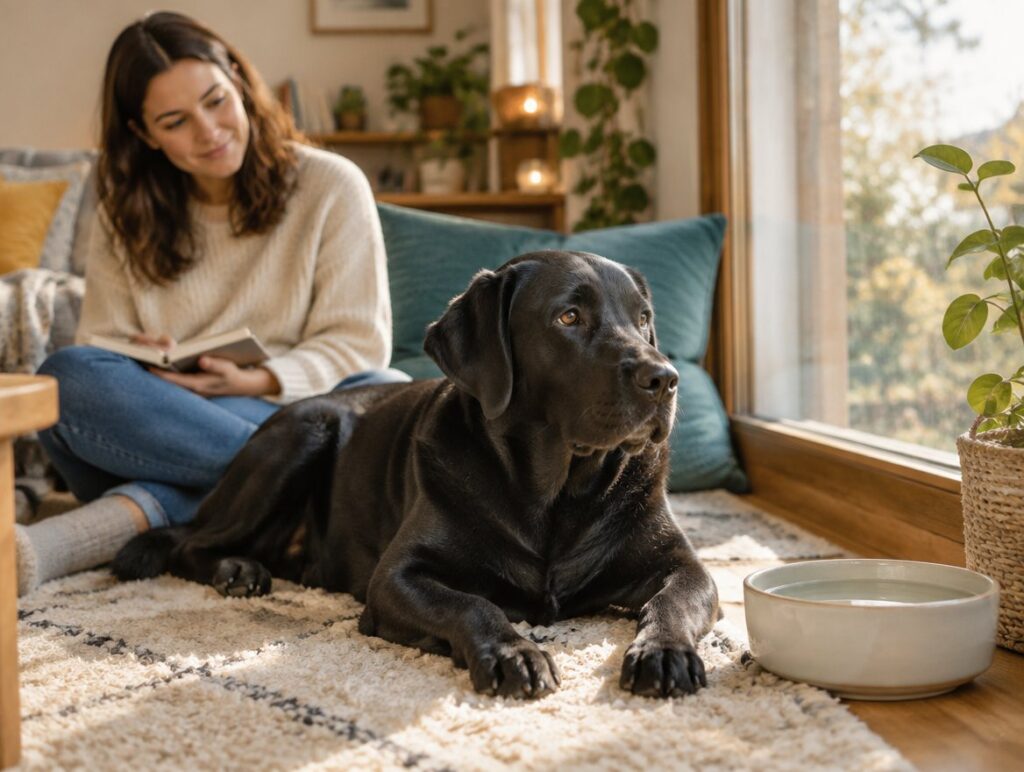
Soft stool in an adult, lively dog often clears up on its own within one to two days, but with a puppy you should not wait that long and should contact your vet sooner. On your morning walk you notice that the poop, which used to be firm and easy to pick up, has suddenly turned mushy. Meanwhile your dog is bouncing about, eating and acting as if nothing is wrong. Often it is enough to watch and wait. You only need to know how to spot the moment when waiting no longer makes sense.
- Soft stool is common in dogs and often clears up on its own. If your dog is lively, eating and drinking, you can watch them for a day or two.
- Stool problems in dogs are usually considered chronic when they last or keep coming back for more than three weeks.
- Common causes include dietary indiscretion, a change of food, stress, parasites and infections. You cannot pin down the cause from a distance.
- Blood in the stool, vomiting, lethargy, or any problems in a puppy or a senior dog are reasons to contact your vet straight away.
What exactly is soft stool, and when is it a problem?
Soft stool is poop that has lost its firm shape. According to VCA Animal Hospitals, diarrhoea is stool without a firm shape that comes in larger amounts or more often than usual. Soft stool can be a mild form of it. You can find an overview of causes and when to go to the vet in the article Diarrhoea in dogs: what to do and when to see a vet.
Timing matters most. A 2020 review of acute diarrhoea in dogs (Candellone et al.) describes acute diarrhoea as problems lasting roughly 3 to 7 days. The Merck Veterinary Manual calls gut problems chronic when they last 3 weeks or longer.
- One-off. One or two soft stools, and your dog is otherwise fine.
- Recurring. Soft stool keeps coming back after days or weeks, for example after every change of food.
- Chronic. The problems last or recur for more than 3 weeks. That is a reason for an examination even if your dog seems happy.
What are the most common causes of soft stool in dogs?
Soft stool in dogs is most often caused by something the dog ate, a change of food or stress. If the problems continue, parasites, infections or a long-term bowel disease come into play. Only a vet can tell which cause it is, by examining your dog.
- Dietary indiscretion. Rubbish, table scraps or something picked up from the ground. A review in Antioxidants (Candellone et al., 2020) lists dietary indiscretion among the common causes of acute diarrhoea.
- A change of food. New food or treats from one day to the next can catch the gut off guard. You can find out how to do it gradually in the article Switching dog food.
- Stress. Moving house, travel or boarding can show up in the stool. We write about it in more detail in the article Stress diarrhoea in dogs: how the mind affects digestion.
- Parasites. For example coccidia or intestinal worms (according to VCA), and also giardia (according to the Companion Animal Parasite Council).
- Infections. Bacterial or viral. In puppies they tend to be more serious.
- Intolerance. Your dog does not tolerate one of the ingredients in a food or treat.
- Medicines, especially antibiotics. Treatment can temporarily upset the gut bacteria. This is covered in the article Dog after antibiotics.
- Chronic enteropathy. A long-term bowel disease in which inflammation is usually assumed. More on this below.
When should you wait and watch, and when should you go to the vet straight away?
If your dog is lively, eating, drinking and there is no blood in the stool, you can watch them for a day or two. VCA Animal Hospitals recommends calling your vet if frequent loose or mushy stool lasts longer than two days. If there is blood, vomiting or weakness, do not wait even a moment.
| Situation | What to do |
|---|---|
| Adult dog is lively, eating and drinking, stool is soft with no blood and has lasted no more than 1 to 2 days | Watch, keep a stool diary, let your dog rest |
| Soft stool lasts longer than 2 days or is getting worse | Call your vet |
| Soft stool keeps coming back after days or weeks, or lasts longer than 3 weeks | Book an examination |
| Blood in the stool, black tarry stool | Contact your vet immediately |
| Vomiting, lethargy, fever, a painful belly, refusing food or water | Contact your vet immediately |
| Puppy, senior dog or a dog with a chronic illness | Do not hesitate, contact your vet immediately |
Soft stool in a puppy: why not to wait
Soft stool in a puppy can have the same causes as in an adult dog, but it is riskier. According to the American Kennel Club, the causes include a change of food or intolerance, bacterial and viral infections, eating rubbish or other objects, parasites and stress.
- Food. New food or treats from one day to the next can upset a puppy’s gut.
- Parasites. Puppies are prone to intestinal parasites, which is why the vet usually wants a stool sample.
- Vaccination. If your puppy has not completed their vaccinations, the cause may be parvovirus, which according to the AKC can be fatal and needs veterinary care at once. With such a puppy, always contact your vet if they have diarrhoea.
The second reason for caution is dehydration. The AKC points out that even mild diarrhoea dehydrates a puppy, so fresh water should always be available. It recommends calling your vet if diarrhoea lasts longer than one day, and straight away if there is blood, fever, vomiting or pain. So do not watch a puppy for two days the way you would an adult dog.
What can you safely do at home?
At home you can give your dog peace and water, watch them and gather notes for your vet. Do not try medicines, fasting or new food on your own.
- Offer fresh water. Water must always be available so your dog does not lose more fluid than they take in.
- Watch your dog. Keep an eye on appetite, energy, vomiting and the number of stools.
- Keep a stool diary. Write down the date, shape, colour, anything unusual in the stool and what your dog ate. It helps your vet a great deal.
- Do not start human medicines or supplements. Human medicines can harm dogs. Your vet decides what to give.
- Do not let a puppy go hungry. A puppy has small energy reserves. Always ask your vet about feeding during diarrhoea. A review in Antioxidants (Candellone et al., 2020) does report that in hospitalised dogs with parvovirus, early tube feeding led to faster improvement than leaving them without food, but no advice for ordinary diarrhoea can be drawn from that. So do not try fasting on your own, and let your vet decide about feeding.
- Do not change food all at once. The gut needs time to adapt to a new diet, so spread any change over several days.
- Prepare a sample. Take a fresh stool sample to the vet in a clean bag or tub. They can use it to look for parasites, for example. They may also ask for samples from several different days, because according to the Companion Animal Parasite Council, giardia cysts are shed intermittently.
What is chronic enteropathy and how does a vet deal with it?
Chronic enteropathy is a long-term bowel disease in which diarrhoea, vomiting, weight loss or loss of appetite last longer than 3 weeks or keep coming back. It includes problems that respond to a change of diet, to antibiotics or to anti-inflammatory medicines. The wider context is summarised in the article Digestive problems in dogs: signs, causes, what to do.
- 1.1%of all dogs that came to two Swedish animal hospitals in 2013–2018 had chronic enteropathy. The study found 814 of them.Holmberg et al., 2022
- over 50%of patients with chronic enteropathy improved markedly, according to Merck, after switching to a special diet alone, under veterinary guidance. In a Swedish study of dogs from specialist hospitals, though, only about 11% of dogs responded to diet alone.Merck Veterinary Manual; Holmberg et al., 2022
A vet usually rules out parasites and other causes first and only then chooses the next step. That is why what matters is an examination, not home experiments.
What does a vet usually check for soft stool?
A vet usually starts with a conversation, a physical examination and a check of a fresh stool sample. According to VCA Animal Hospitals, blood tests, a faecal test or swab for parasites, tests for infections, bacterial cultures, X-rays, ultrasound or endoscopy may follow.
Most dogs do not need most of these tests. According to VCA, in mild cases further tests are done mainly when the initial approach does not work. What to test and when is always the vet’s decision, based on the condition of the individual dog. Your stool diary will help: when the problems started, what they look like and what your dog ate.
Is there a difference between small bowel and large bowel diarrhoea?
Yes, they look different to the owner. The Merck Veterinary Manual describes large bowel diarrhoea as frequent, in small amounts and with mucus or blood, while weight loss appears more often with small bowel problems. For you it is only a hint that helps you describe the problems to your vet. It does not determine what is going on.
| Sign | Large bowel | Small bowel |
|---|---|---|
| Urgency and straining | Typical | Less typical |
| Amount of stool | Smaller amounts | Larger amounts |
| Mucus and fresh blood | More common | Less typical |
| Weight loss | Less common | More common |
The table is simplified and the problems often overlap. Do not use it as a guide to work out the cause.
Frequently asked questions
How long can a dog have soft stool before I go to the vet?
With an adult dog who is lively, eating and drinking, you can watch for a day or two and write down what the poop looks like. If soft stool lasts longer than two days, gets worse or there is blood in the stool, call your vet. With puppies, senior dogs and dogs with a chronic illness, get in touch right away.
Is mushy stool in a dog dangerous?
By itself it usually is not, as it is often a short reaction to food, a change of food or stress. It can become dangerous if blood, vomiting, lethargy or a fever appear, or if it lasts longer than two days. Then your dog needs an examination, not home experiments. With puppies and senior dogs, get in touch with your vet right away.
My dog has diarrhoea: what should I do first?
Offer fresh water, watch appetite, energy and vomiting, and write down what and when your dog ate and what the poop looks like. Do not give human medicines, do not try fasting and do not change the food on your own. With a puppy, a senior dog, or if there is blood, vomiting or lethargy, contact your vet straight away.
Is soft stool in a puppy normal?
Sometimes it can be, for example after a change of food or the stress of a new home, but in a puppy it is riskier than in an adult dog because a puppy quickly becomes dehydrated. Call your vet if the soft stool lasts longer than one day, and straight away if there is blood, vomiting, lethargy or if the puppy has not finished its vaccinations.
When is loose stool in a dog chronic?
Problems are usually considered chronic when they last or recur for more than 3 weeks. According to the Merck Veterinary Manual, these are gut problems lasting 3 weeks or longer. In that case it is wise to have your dog examined even if they seem happy.
Should I fast my dog when they have soft stool?
Not on your own. Fasting is risky for puppies. A 2020 review reports that in hospitalised dogs with parvovirus, early tube feeding led to faster improvement than leaving them without food, but no advice for ordinary diarrhoea follows from that. Your vet decides how to feed your dog during diarrhoea.
What will the vet do if I bring a stool sample?
They will usually use it to test for parasites. According to VCA Animal Hospitals, blood tests, tests for infections, X-rays or ultrasound may follow. The scope of the examination always depends on your dog’s condition, and in mild cases further tests are done mainly if the initial approach fails.
Sources
- VCA Animal Hospitals. Diarrhea in Dogs. vcahospitals.com/know-your-pet/diarrhea-in-dogs
- Candellone A et al. (2020). Acute Diarrhea in Dogs: Current Management and Potential Role of Dietary Polyphenols Supplementation. Antioxidants. doi.org/10.3390/antiox9080725
- Merck Veterinary Manual. Chronic Enteropathies in Small Animals. merckvetmanual.com
- Holmberg J et al. (2022). Chronic Enteropathy in Dogs: Epidemiologic Aspects and Clinical Characteristics of Dogs Presenting at Two Swedish Animal Hospitals. Animals. doi.org/10.3390/ani12121507
- American Kennel Club. Puppy Diarrhea: Causes, Treatment, and Symptoms. akc.org/expert-advice/health/puppy-diarrhea
- Merck Veterinary Manual. Colitis in Small Animals. merckvetmanual.com
- Companion Animal Parasite Council. Giardia. capcvet.org/guidelines/giardia
This article is educational and does not replace a veterinary examination. If you are not sure, ask your vet.
This article was proofread with the help of AI. This is a translation from Czech, so it may contain inaccuracies.