Blog · Digestion
Blood in dog poop: see a vet now or within 24 hours?
Dog pooping blood? Black stool, lots of blood, vomiting, lethargy or a puppy: call your vet now. A streak of fresh blood in a lively dog: call and book a visit.
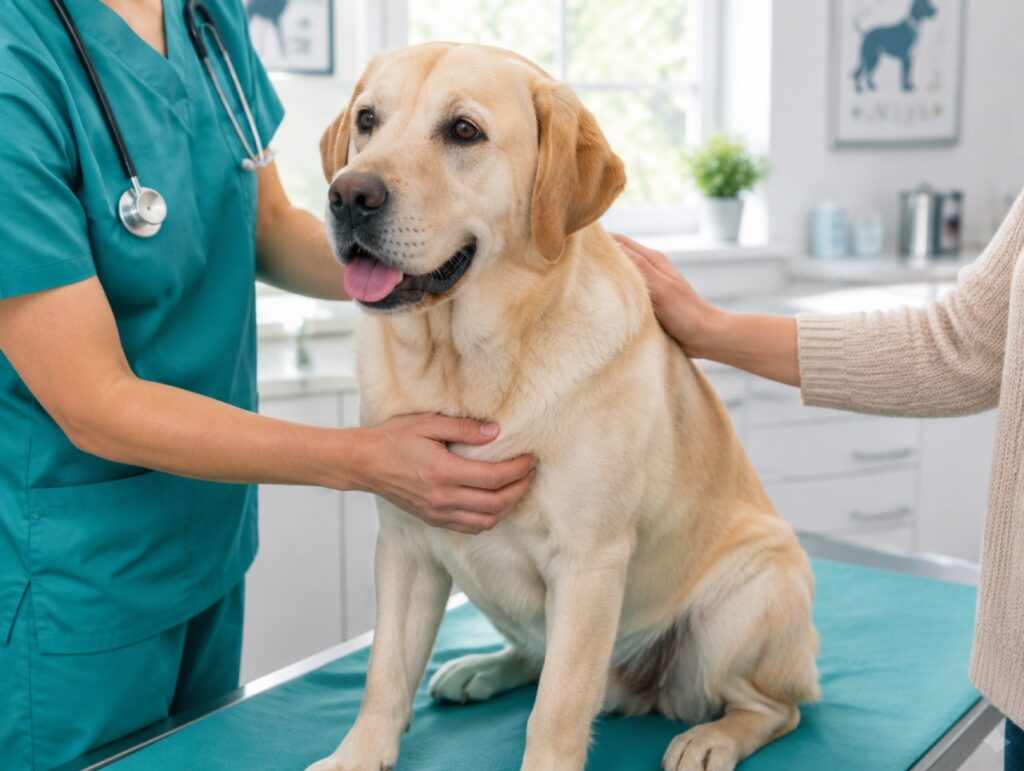
Blood in a dog’s poop looks dramatic, even when it is only a thin red streak. Behind blood in the stool there is often an irritated large bowel, but sometimes a serious illness that can get worse within hours. When your dog poops blood, what matters is what the blood looks like, how much there is and how your dog is behaving. Here we cover both fresh red blood and black (tarry) stool. You will find when to call straight away, when an appointment within 24 hours is enough and what to prepare for your vet.
- Bright red blood in the stool (hematochezia) usually comes from the large bowel or rectum, and black tarry stool (melena) from the stomach or small bowel (AKC, Merck Veterinary Manual).
- Call your vet straight away for black stool, a large amount of blood, vomiting, lethargy, refusing water, pale gums, a suspected poison, and in a puppy.
- A single streak of fresh blood on otherwise normal stool in a lively adult dog is a reason to call your vet as soon as you see it. An ordinary appointment within 24 hours is enough only if your vet agrees.
- Do not try home treatment, human medicines or diet experiments of your own when there is blood in the stool. Only an examination can determine the cause.
When should you take a dog with blood in its poop to the vet straight away, and when book an appointment?
Blood in a dog’s stool is always a reason to contact your vet; only the speed differs. The AKC advises calling immediately for lethargy, vomiting, refusing food or water, pale gums or a large amount of bloody diarrhoea. If your dog is unvaccinated or may have come into contact with parvovirus, call before travelling to the clinic so they can prepare.
- Black, tarry or sticky stool.
- A larger amount of blood or repeated bloody diarrhoea.
- Blood together with vomiting, lethargy, weakness, fever, a painful belly or refusing food or water.
- Pale gums or collapse.
- Blood in the stool of a puppy, especially an unvaccinated or incompletely vaccinated one.
- A suspicion that your dog has eaten rodent poison, medicines or a foreign object.
An ordinary appointment within 24 hours comes into consideration only for a lively adult dog that eats, drinks, does not vomit and has blood only as a slight admixture on otherwise normal stool (a rule of thumb from our editors, not a study conclusion). Even so, call your vet as soon as you see the blood, and the vet will decide from your description whether an appointment is enough. With a senior, a small breed or a dog with a chronic illness, do not wait. If your dog gets worse, go straight away.
What does blood in a dog’s poop look like and where does it probably come from?
How the blood looks hints at where the bleeding started. Fresh red blood comes from the end of the digestive tract, while black stool means blood digested on its way. Only a vet can make a diagnosis.
| What the blood looks like | Where it probably comes from | How urgent |
|---|---|---|
| Fresh red streaks or drops on the surface of the stool, often with mucus | Large bowel, rectum or the area around the anus. Typical of colitis (Merck Veterinary Manual). | Call your vet straight away and arrange an appointment. Go immediately if there is a lot of blood, it repeats or your dog is lethargic. |
| Stool black, tarry, sticky, foul-smelling | Stomach or small bowel. The blood is digested (AKC). | Immediately, even if your dog is otherwise lively. |
| Watery bloody diarrhoea, often described as raspberry jam, usually with vomiting | It may be AHDS, acute hemorrhagic diarrhea syndrome (Unterer and Busch, 2021). | Immediately. Your dog can dehydrate quickly. |
| Diarrhoea with blood and a bad smell in a puppy | Possibly parvovirus, other infections or intestinal parasites. | Immediately, even at night. |
| Dark stool, but no red mark on a paper towel | It may be the colour of the food, for example with liver or beef (AKC). | Photograph it and describe it to your vet the same day. If in doubt, call straight away. |
Rub a bit of the black stool on a white paper towel: a red-brown streak supports the suspicion of digested blood (AKC). General colours and consistency are covered in the article Dog poop: what colour, shape and consistency reveal.
What are the most common causes of blood in a dog’s poop?
There are many causes, from minor irritation to a life-threatening condition, and you cannot tell them apart from a distance. The AKC lists among them dietary indiscretion, colitis, anal gland problems, intestinal parasites, inflammatory bowel disease, pancreatitis, clotting disorders, tumours, toxins, parvovirus and AHDS.
- Colitis (inflammation of the large bowel). The Merck Veterinary Manual gives as the typical sign large bowel diarrhoea with mucus, fresh blood, straining to pass stool and sometimes pain when defecating. The dog goes to poop more often and in small amounts.
- Unsuitable food or a change of food. Rubbish, table scraps, bones. You can find what harms your dog in the article What dogs must not eat.
- Parasites. Hookworms are intestinal worms (genus Ancylostoma) that suck blood. According to the Companion Animal Parasite Council, they can cause anaemia and tarry diarrhoea in puppies. Giardia causes diarrhoea, sometimes with mucus, and its cysts are shed intermittently, so a stool sample is sometimes collected repeatedly.
- Parvovirus. It threatens mainly unvaccinated puppies; more in the section on puppies.
- A foreign object. It can injure the lining or block the bowel. If you know your dog swallowed something, call straight away.
- Rodent poisons with anticoagulants. According to the Merck Veterinary Manual, visible bleeding appears roughly 3 to 7 days after ingestion and may be accompanied by black stool or fresh blood, nosebleeds, bruising and pale gums. If you suspect it, call straight away, even if your dog looks healthy. Do not induce vomiting unless your vet tells you to.
- Medicines, especially anti-inflammatories (NSAIDs). The AKC lists reactions to anti-inflammatory drugs among the causes of melena. Never give your dog human painkillers.
- Tumours in older dogs. A tumour in the digestive tract can cause chronic or repeated bleeding. Always have changes in a senior’s stool examined; you can find more in the article Senior dog: 9 changes you should not overlook.
What is AHDS, bloody diarrhoea like raspberry jam?
AHDS (acute hemorrhagic diarrhea syndrome) is sudden severe bloody diarrhoea, often with vomiting, which can quickly lead to life-threatening dehydration (Unterer and Busch, 2021). It used to be called hemorrhagic gastroenteritis, but the damage to the lining is only in the gut, not in the stomach (Unterer et al., 2014).
In a study of 108 dogs (Mortier et al., 2015), dogs with AHDS had a lower weight (median 9.8 kg) than other dogs in the hospital, and they were most often Yorkshire Terriers, Miniature Pinschers, Miniature Schnauzers and Maltese. In 80% of the dogs, vomiting came before the bloody diarrhoea. The blood was thickened: the haematocrit (the share of red blood cells) had a median of 57.1%, but was above 60% in only under a third of the dogs. With early treatment, mainly drips, the prognosis is good (Unterer and Busch, 2021).
AHDS is diagnosed by ruling out other causes (Unterer and Busch, 2021). You cannot recognise it at home, so do not wait to see whether the diarrhoea passes.
What should you do when your dog poops blood?
Do not try anything, and write down what you see. It saves your vet time.
- Photograph the poop. A photo with a date and time shows the colour, the amount of blood and the mucus better than a description.
- Collect a fresh sample. A clean tub or a tightly sealed bag. According to VCA, a piece about 2.5 cm long is enough, and you should take it in within 6 hours, or within 24 hours if you keep it in the fridge (away from food).
- Write down what your dog ate. New treats, bones, rubbish, scraps, chewing gum, plants, grapes, chocolate. Mention too whether your dog has access to rodent poison or medicines.
- Prepare the vaccination record and worming details. For a puppy this is key.
- Note down other signs. Vomiting, lethargy, drinking, appetite, pain, how many times your dog pooped.
- Call your vet. Tell them what you see and follow their instruction on how fast to come.
Give nothing at home: no human medicines, no herbs and no fasting on your own. The diet for diarrhoea is set by your vet, and after the examination the article Bland diet for dog diarrhoea will advise you too. You can find a general overview in the article Diarrhoea in dogs: what to do and when to see a vet.
Why is blood in a puppy’s stool so serious?
Blood in a puppy’s stool is always a reason to call your vet straight away, because a puppy has small fluid reserves and weakens quickly. According to VCA, parvovirus most threatens unvaccinated dogs under one year, and in puppies up to five months it hits hardest. It usually starts with vomiting, then comes diarrhoea with a strong smell, which may or may not contain blood.
Hookworms are dangerous in puppies too (see above). If parvovirus is suspected, call before you arrive so the clinic can protect other patients. According to VCA, the virus is shed in stool for about 14 days after the signs have gone and can survive on surfaces for up to three months.
What does the vet do when a dog poops blood?
The vet asks when the blood started, what your dog ate and how it is vaccinated, and examines your dog. According to the AKC, a stool examination for parasites and bacteria, blood tests and, as needed, X-ray, ultrasound or endoscopy with sampling may follow.
Treatment depends on the cause. For dehydration and in AHDS, according to VCA, the basis is intravenous fluids, and subcutaneous fluids are usually not enough. Antibiotics are not automatic. The European ENOVAT recommendations (Jessen et al., 2024) explicitly advise against them in mild to moderate acute diarrhoea, with or without blood. They suggest them in a severe course, when the signs of systemic illness do not ease even after fluids have been replaced. The decision belongs to your vet.
What role does the microbiome play?
In AHDS the main suspects are gut bacteria, specifically Clostridium perfringens and its toxins (Unterer and Busch, 2021). In the study by Sindern et al. (2019), C. perfringens carrying the toxin genes netE and netF was found in the stool of 26 of 54 dogs with AHDS (48.1%), 8 of 66 healthy dogs (12.1%) and none of 54 dogs with parvovirus. This is an association. Whether the toxins trigger the disease is for further studies to show, according to the authors.
In another study of 10 dogs with AHDS (Leipig-Rudolph et al., 2018), all 5 examined isolates of C. perfringens type A carried the gene for the toxin netF. The authors conclude from this that netF damages the gut in a significant share of dogs with AHDS, but the sample is small.
In a small randomised study of 25 dogs with AHDS (Ziese et al., 2018), with supportive treatment without antibiotics, dogs improved quickly both with a probiotic (significantly from day 3) and with a placebo (from day 4). The probiotic was linked to a faster return of the composition of gut bacteria. Probiotics are not a substitute for an examination and drips. Read more about the role of gut bacteria in the article Dog gut microbiome: what it is and why it matters.
What if my dog poops blood and vomits?
Blood in the stool together with vomiting is a reason to call your vet straight away, because your dog loses fluids quickly. If your dog vomits blood, cannot keep water down or is weak, go immediately. You can find more in the articles Dog vomiting: when to wait and when to see the vet and Digestive problems in dogs.
Frequently asked questions
Is blood in a dog’s stool always dangerous?
Not always, but it is always a reason to contact your vet. A slight admixture of fresh blood in a lively dog often comes from an irritated large bowel, but the same sign accompanies serious illnesses too. Call straight away for black stool, a large amount of blood, vomiting, lethargy, pale gums or in a puppy.
My dog poops blood but is otherwise lively. What should I do?
Even if your dog is lively, call your vet as soon as you see the blood, describe what it looks like and how much there is, and have a photo ready. A slight streak of fresh blood on otherwise normal stool is often from an irritated large bowel, but you cannot tell without an examination. With a larger amount of blood, vomiting, lethargy, pale gums or in a puppy, go immediately. Do not try anything at home, and give no human medicines.
What does black stool in a dog mean?
Black tarry stool is called melena and usually means digested blood from the stomach or small bowel (AKC). The cause may be an ulcer, a foreign object, medicines or rodent poison. It is a serious sign even in an otherwise lively dog, so call your vet straight away.
Can a change of food cause blood in the stool?
A change of food can irritate the gut and cause loose stool, but you cannot tell it from other causes without an examination. If there is blood in the stool, call your vet and describe the latest meals. Always change food gradually, as described in the article Switching dog food: a 7 to 10 day plan.
What do blood and mucus in a dog’s stool look like?
Mucus is a clear or whitish slimy layer on the stool, and blood looks like red streaks or drops. Together with straining and small amounts, they often point to the large bowel (Merck Veterinary Manual). Show your vet a photo and have your dog examined, especially if it keeps happening.
Should I give my dog probiotics or human medicines for bloody diarrhoea?
No. Human medicines can harm your dog, and probiotics do not explain the bleeding or replace an examination. In a small study of AHDS, dogs improved in both groups, with a probiotic and with a placebo. Call your vet first and leave the giving of any products to their decision.
Sources
- Unterer S, Busch K (2021). Acute Hemorrhagic Diarrhea Syndrome in Dogs. Veterinary Clinics of North America: Small Animal Practice. doi.org/10.1016/j.cvsm.2020.09.007
- Unterer S, Busch K, Leipig M et al. (2014). Endoscopically visualized lesions, histologic findings, and bacterial invasion in the gastrointestinal mucosa of dogs with acute hemorrhagic diarrhea syndrome. Journal of Veterinary Internal Medicine. doi.org/10.1111/jvim.12236
- Mortier F, Strohmeyer K, Hartmann K, Unterer S (2015). Acute haemorrhagic diarrhoea syndrome in dogs: 108 cases. Veterinary Record. doi.org/10.1136/vr.103090
- Leipig-Rudolph M et al. (2018). Intestinal lesions in dogs with acute hemorrhagic diarrhea syndrome associated with netF-positive Clostridium perfringens type A. Journal of Veterinary Diagnostic Investigation. doi.org/10.1177/1040638718766983
- Sindern N et al. (2019). Prevalence of Clostridium perfringens netE and netF toxin genes in the feces of dogs with acute hemorrhagic diarrhea syndrome. Journal of Veterinary Internal Medicine. doi.org/10.1111/jvim.15361
- Ziese AL et al. (2018). Effect of probiotic treatment on the clinical course, intestinal microbiome, and toxigenic Clostridium perfringens in dogs with acute hemorrhagic diarrhea. PLoS ONE. doi.org/10.1371/journal.pone.0204691
- Jessen LR et al. (2024). European Network for Optimization of Veterinary Antimicrobial Therapy (ENOVAT) guidelines for antimicrobial use in canine acute diarrhoea. The Veterinary Journal. doi.org/10.1016/j.tvjl.2024.106208
- American Kennel Club. What to Do If You Find Blood in Your Dog’s Stool. akc.org/expert-advice/health/blood-in-dog-poop
- Merck Veterinary Manual. Colitis in Small Animals. merckvetmanual.com
- Merck Veterinary Manual. Anticoagulant Rodenticide Poisoning in Animals. merckvetmanual.com
- VCA Animal Hospitals. Hemorrhagic Gastroenteritis in Dogs. vcahospitals.com
- VCA Animal Hospitals. Parvovirus in Dogs. vcahospitals.com
- VCA Animal Hospitals. Importance of Fecal Tests in Dogs & Cats. vcahospitals.com
- Companion Animal Parasite Council. Hookworms. capcvet.org/guidelines/hookworms
- Companion Animal Parasite Council. Giardia. capcvet.org/guidelines/giardia
This article is educational and does not replace a veterinary examination. If you are not sure, ask your vet.
This article was proofread with the help of AI. This is a translation from Czech, so it may contain inaccuracies.