Blog · Health
What dogs must not eat: a table of dangerous foods
A dog must not eat xylitol, grapes, raisins, chocolate, onion, garlic or horse chestnuts. The table shows why, covers beans and what to do if your dog ate them.
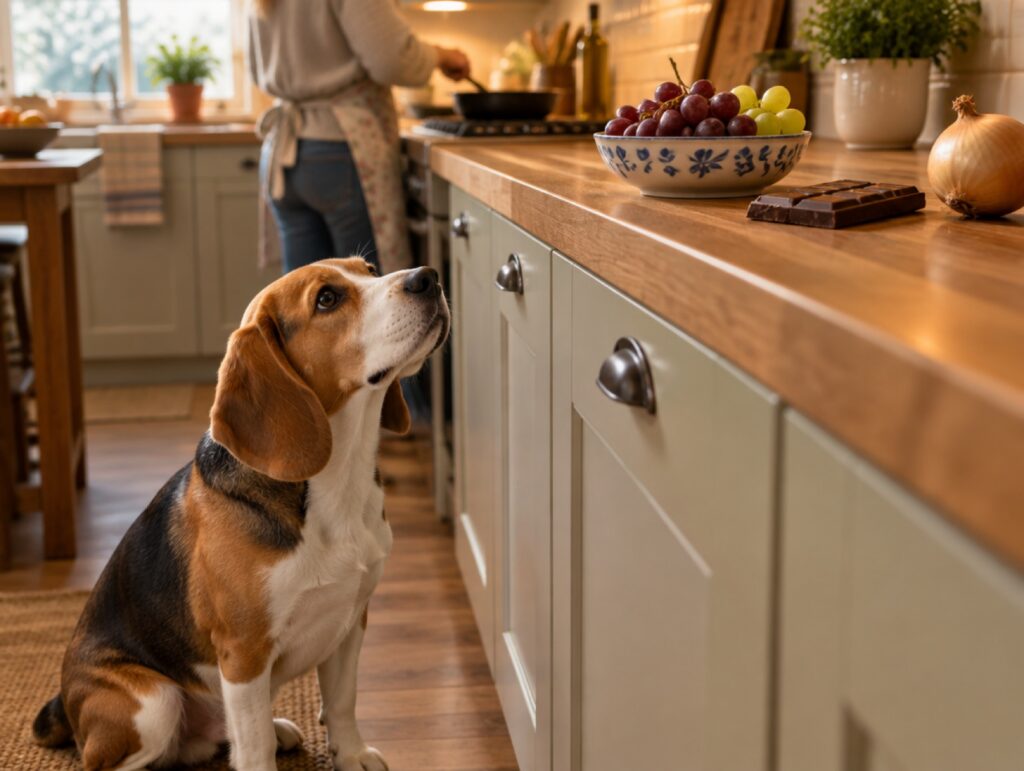
You drop a piece of chewing gum, a drip of chocolate ice cream or a handful of raisins from your muesli on the floor. Your dog gets there before you do. Most of the time nothing happens, but with a few foods a single bite is enough and it is time to call your vet. This table will help you recognise which ones they are. You can save it or print it for the fridge.
- The most dangerous foods for a dog are xylitol (a sweetener), grapes and raisins, chocolate, onion and garlic, macadamia nuts, alcohol and mouldy food.
- With grapes and raisins, according to Pet Poison Helpline, it is not only a matter of quantity: even a small amount can lead to kidney failure.
- In autumn there is also a risk from acorns, horse chestnuts (conkers), wild mushrooms and compost.
- If your dog has eaten something dangerous, call your vet straight away and do not wait for signs.
- Do not make your dog vomit on your own and do not give any home remedies.
What must a dog not eat? A table of the most dangerous foods
A dog must not eat xylitol, grapes and raisins, chocolate, onion and garlic, macadamia nuts, alcohol, yeast dough, coffee, a lot of salt or mouldy food. With all of them, if your dog has eaten them, call your vet even if it seems fine for now.
| Food | Why it is dangerous | Where it hides |
|---|---|---|
| Xylitol (birch sugar) | According to the ASPCA, it sharply lowers blood sugar, can damage the liver and lead to seizures | Chewing gum, sweets, toothpaste, baked goods, peanut butter (Pet Poison Helpline) |
| Grapes, raisins, currants | Even a small amount can lead to kidney failure (Pet Poison Helpline) | Muesli, baked goods, trail mixes with dried fruit, grape juice |
| Chocolate and cocoa | Contains methylxanthines (theobromine and caffeine), according to Pet Poison Helpline. The darker, the more dangerous (ASPCA) | Boxed chocolates, baked goods, cocoa powder, ice cream |
| Onion, garlic, chives | According to the ASPCA, they damage red blood cells and can lead to anaemia | Leftovers from dinner, sauces, soups, seasoning mixes |
| Macadamia nuts | According to the ASPCA, they cause weakness, lack of coordination, tremors, vomiting and raised body temperature | Biscuits, muesli, snack bars |
| Alcohol | According to the ASPCA, vomiting, lack of coordination, laboured breathing, tremors, coma | Liqueur chocolates, drinks, fruit in alcohol |
| Yeast dough | According to the ASPCA, the yeast in the stomach produces gas and alcohol, the belly swells and there is a risk of a twisted stomach | Home baking, pizza dough and bread dough |
| Coffee and caffeine | Methylxanthines as in chocolate (ASPCA) | Coffee beans, coffee grounds, energy drinks |
| Salt in large amounts | According to the ASPCA, thirst, vomiting, tremors, seizures. The FDA also warns about salt dough for ornaments | Salt dough, salty snacks, sea water |
| Horse chestnuts (conkers) | According to the ASPCA, they contain aesculin and other saponins, irritate the digestion strongly and may lead to staggering and weakness | Autumn walks, parks, avenues, children collecting conkers |
| Raw beans (especially red) | According to PetMD, raw red beans are toxic to dogs because they contain the lectin phytohaemagglutinin | Soaked but uncooked beans, undercooked kitchen leftovers |
| Mouldy food and compost | They may contain mycotoxins, which cause vomiting, tremors and seizures (Pet Poison Helpline) | Bins, compost, forgotten snacks |
The table is not complete. With chocolate, according to Pet Poison Helpline, it depends on what type and how much your dog ate, how big it is and how healthy it is, and it is similar with other foods. So do not guess on your own whether it is “still fine”, and if in doubt, call your vet.
- 12 hoursis the time within which the first signs, for example weakness, tremors and vomiting, usually appear after eating macadamia nuts.ASPCA
- several dayscan pass before kidney failure develops after grapes or raisins, even if your dog at first only vomited.Pet Poison Helpline
Which autumn foods and fruits are dangerous for a dog?
On autumn walks, a dog most often finds acorns, horse chestnuts, wild mushrooms and rotting leftovers. Each causes a different problem.
- Acorns. The ASPCA states that they contain tannins, which irritate digestion and, even after a single helping, can cause vomiting, diarrhoea and belly pain.
- Horse chestnuts (conkers). The horse chestnut tree (Aesculus), which bears conkers, is, according to the ASPCA, toxic to dogs. It contains aesculin and other saponins and causes severe vomiting, diarrhoea, weakness and staggering. Edible chestnuts from the sweet chestnut tree (genus Castanea) are, according to the ASPCA, non-toxic (the ASPCA assesses the American chestnut), but they are easy to mix up, so it is better not to let your dog have them.
- Mushrooms. Pet Poison Helpline advises treating every unknown mushroom as poisonous, because only an expert can identify it precisely. Signs range from vomiting and diarrhoea to seizures and liver damage, so do not wait for them to appear.
- Compost and mould. Rotting leftovers may contain mycotoxins, which cause tremors. According to Pet Poison Helpline, they cause vomiting, tremors, seizures and fever.
- Corn cobs. The ASPCA warns that a large amount of leaves, seeds or corn cobs can lodge in the gut and cause a blockage.
What should you do if your dog has eaten something dangerous?
If your dog has eaten something dangerous, call your vet or an emergency clinic and tell them what and how much. Time matters, because with some substances early action is decisive.
- Move your dog away from what is left. Remove the food or the plant so that it does not eat more.
- Find out exactly what it was. Get the packaging or the leftovers, and estimate the amount and the time when your dog ate it.
- Call your vet straight away. Give your dog’s weight, what it ate, how much and when. They will decide whether you should come in.
- Do not make your dog vomit on your own. Without your vet’s advice it may not be safe. They will decide based on what your dog ate and when.
- Give nothing. No human medicines, milk or home remedies.
- Take the packaging with you. The ingredients help your vet, especially with sweeteners and chocolate.
What is not a poison but can still harm a dog?
Some foods are not poisons but can harm a dog. Often it is digestive upset that settles. Fatty food, however, can trigger pancreatitis, and bones can injure or block the digestive tract. So with repeated vomiting, a painful belly or lethargy, call your vet straight away. For a dog with a sensitive tummy, a puppy or a senior, talk to your vet even about mild problems.
| Food | What can happen |
|---|---|
| Milk and dairy products | According to the ASPCA, dogs lack enough lactase, so they can get diarrhoea or digestive upset |
| Nuts (other than macadamia) | According to the ASPCA, they contain a lot of fat, which can cause vomiting, diarrhoea and pancreatitis |
| Edible chestnuts (roasted, boiled) | Non-toxic (ASPCA), but the skin and hard pieces may irritate the digestion or get stuck in the gut. Salted or flavoured chestnuts do not belong in the bowl |
| Tinned beans and baked beans | PetMD points out the high sodium content of tinned beans, and baked beans contain sugar and seasoning. The sauces may also contain onion or garlic, which are dangerous for dogs |
| Coconut | According to the ASPCA, it can cause stomach upset, looser stool and diarrhoea |
| Raw meat, eggs and bones | According to the ASPCA, there is a risk of bacteria (salmonella, E. coli) and of injury to or blockage of the digestive tract by bones |
| Fatty table scraps | According to Pet Poison Helpline, from stomach upset to severe pancreatitis |
Bones are a special case. The FDA warns that when a bone or chew toy gets stuck in the stomach or gut, the signs may not appear straight away. Vomiting, diarrhoea, belly pain or refusing food can come hours to days later. Christmas bones are covered in the article Christmas with a dog: what must stay off the table.
How can you avoid dangerous foods?
Most accidents can be prevented with a few habits. It is not about fear, more about order in the kitchen.
- Bins and compost. Close them or put them where your dog cannot reach.
- Bags and handbags. Chewing gum, sweets and toothpaste with xylitol are often lying around in a handbag.
- Baking and holidays. Do not leave yeast dough, chocolate and raisins on the table or on the worktop.
- Visitors. Tell guests not to feed your dog scraps from the table.
- Walks. In autumn, watch for acorns, chestnuts and mushrooms. A “leave it” command or a lead will help.
- Your vet’s phone number. Keep the number of an emergency vet clinic in your phone.
If your dog has digestive problems after eating something unsuitable, the article Dog vomiting: when to wait and when to see the vet may be useful, and for soft stool Soft stool in dogs: causes and what to do. It is worth saving this table: next time you will know within a few seconds whether to call.
Frequently asked questions
What must a dog not eat most of all?
The most dangerous are xylitol, grapes and raisins, chocolate, onion and garlic, macadamia nuts, alcohol and mouldy food. With grapes and raisins, according to Pet Poison Helpline, even a small amount can do harm. If your dog has eaten them, call your vet straight away. It helps if you say exactly what your dog ate, how much there was and how much your dog weighs.
What should I do if my dog has eaten chocolate?
Call your vet and give the type of chocolate, the amount and your dog’s weight. According to the ASPCA, the darker the chocolate, the more dangerous it is. According to Pet Poison Helpline, chocolate sweets may also contain other harmful ingredients, for example xylitol, raisins or macadamia nuts. According to the ASPCA, unsweetened baking chocolate and cocoa powder contain the most harmful substances. Call straight away even if your dog looks fine for now.
Are acorns poisonous to dogs?
According to the ASPCA, acorns contain tannins, which irritate digestion and can cause vomiting, diarrhoea and belly pain. If your dog has eaten a lot of acorns or is feeling sick, call your vet. According to the ASPCA, serious harm to health is rare in dogs, because they usually do not eat enough. Still, it is better to lead your dog away from them on a walk.
Can a dog eat chestnuts?
Horse chestnuts (conkers) are, according to the ASPCA, toxic to dogs. Edible chestnuts from the sweet chestnut tree (genus Castanea) are, according to the ASPCA, non-toxic (the ASPCA assesses the American chestnut). Because chestnuts are easy to mix up, it is better to lead your dog away from all of them. If your dog has eaten a horse chestnut, call your vet straight away.
Can a dog eat roasted chestnuts?
Roasted edible chestnuts (from the sweet chestnut tree, not the horse chestnut) are, according to the ASPCA, not poisonous, but they are not a suitable treat. Give your dog at most a small piece of plain chestnut without the skin, never salted or flavoured. A whole chestnut or the skin can get stuck in the gut. Horse chestnuts from the tree are poisonous, and if your dog has eaten them, call your vet straight away.
Can a dog eat beans?
Well-cooked plain beans without salt, onion and garlic can be given to a dog in a small amount as an occasional side. Raw or undercooked beans, especially red ones, are toxic according to PetMD because of phytohaemagglutinin. Tinned beans contain a lot of salt and baked beans contain sugar and seasoning, so they do not belong in a dog’s bowl. If your dog has eaten raw beans, call your vet.
Can even a single raisin or grape harm a dog?
Yes, it can. According to Pet Poison Helpline, it is not only a matter of quantity, and problems can appear even after a small amount. Why grapes do harm is not yet certain. The ASPCA considers tartaric acid a possible cause. If your dog has eaten them, call your vet and do not wait for signs.
Should I make my dog vomit if it has eaten something?
Not on your own. With some substances vomiting would harm your dog, and home remedies can add another problem. Call your vet and tell them what your dog ate and when. If it is appropriate, they will induce the vomiting. Take the packaging or the remains of what your dog ate with you.
Sources
- ASPCA. People Foods to Avoid Feeding Your Pets. aspca.org/pet-care/animal-poison-control/people-foods-avoid-feeding-your-pets
- ASPCA. 5 Toxic Seasonal Plants You Don’t Want Your Pet To Fall For. aspca.org/news/5-toxic-seasonal-plants-you-dont-want-your-pet-fall
- ASPCA. Toxic and Non-toxic Plants: Horse Chestnut. aspca.org/…/horse-chestnut
- ASPCA. Toxic and Non-toxic Plants: Chestnut. aspca.org/…/chestnut
- Pet Poison Helpline. Is Xylitol Dangerous for Dogs? petpoisonhelpline.com
- Pet Poison Helpline. Are Grapes and Raisins Poisonous to Dogs? petpoisonhelpline.com
- Pet Poison Helpline. Chocolate. petpoisonhelpline.com/poison/chocolate
- Pet Poison Helpline. Moldy Food (Mycotoxins). petpoisonhelpline.com/poison/mycotoxin
- Pet Poison Helpline. Wild Mushrooms and Dogs. petpoisonhelpline.com/pet-tips/wild-mushrooms-and-dogs
- Pet Poison Helpline. Common Fall Toxins. petpoisonhelpline.com/pet-safety-tips/fall-toxins
- US Food and Drug Administration. Keep Your Dogs and Cats Safe From Holiday Hazards. fda.gov/consumers/consumer-updates/keep-your-dogs-and-cats-safe-holiday-hazards
- Pet Poison Helpline. Buckeye (Horse Chestnut). petpoisonhelpline.com/poison/buckeye
- PetMD. Can Dogs Eat Beans? petmd.com/dog/nutrition/can-dogs-eat-beans
This article is educational and does not replace a veterinary examination. If you are not sure, ask your vet.
This article was proofread with the help of AI. This is a translation from Czech, so it may contain inaccuracies.