Blog · Behaviour
Why do dogs eat poop? What science and microbiome say
Dogs eat poop for several reasons and science does not know the exact cause. A nutrient deficiency is not proven. The risks are parasites and bacteria.
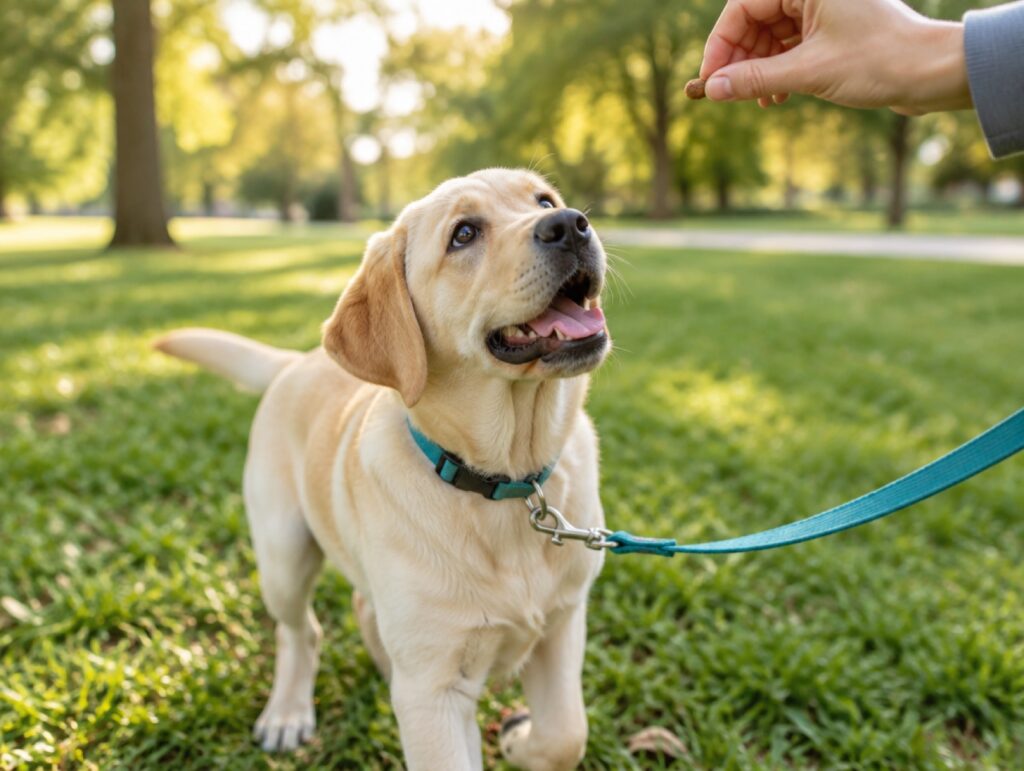
You are walking your dog along the pavement and it suddenly stops at a poop left behind by another dog. Or worse: it turns round and gets stuck into its own. The question comes straight away: why does a dog eat poop, and is it missing something? The answer is less dramatic than you expect: science does not yet know the cause, and the link with gut bacteria is different from what people say.
- Coprophagia is the technical name for eating stool. According to a survey by Hart et al. (2018), 16% of owners had seen their dog eat poop at least six times and about 23% at least once.
- Science does not know the exact cause. One unconfirmed hypothesis says it is an inherited habit of clearing fresh droppings before parasite eggs can develop into larvae.
- The nutrient deficiency hypothesis is not yet supported: in the survey by Hart et al. (2018), coprophagia was not related to the type of food.
- The risk is not the eating itself but what may be in the stool: intestinal parasites, bacteria or traces of another animal’s medicines.
- No study has shown that a dog “tops up” beneficial bacteria by eating poop.
Is it normal for a dog to eat poop?
Yes, it is more common than owners think. In the online survey by Hart et al. (2018), 1,441 dog owners answered questions about eating stool. Most (76.9%) had never seen their dog eat poop, 16.0% had seen it at least six times and a further 7.1% once to five times.
Hart et al. (2018) also mention an older survey, according to which about 28% of dogs ate stool (dog and herbivore stool, without distinction). These are selective owner questionnaires, so take the numbers as a rough guide. But your dog is certainly not an exception.
Why does a dog eat its own poop? What science says
Why a dog eats its own poop is not yet known for certain. Most data came from the survey by Hart et al. (2018): two online questionnaires, the second of which evaluated 1,475 dogs that owners had seen eat stool more than ten times and at least once a week.
The most interesting finding is that dogs eat almost only fresh stool: in the first questionnaire this was true for 82% of coprophagic dogs, in the second for 85% (stool at most two days old). From this the authors derive a hypothesis: a wolf that wants a den site free of parasites must eat the droppings before infectious larvae develop from the eggs. According to the overview in the article, this takes 2 to 9 days in hookworms.
- 16%of dogs were seen by their owners eating poop at least six timesHart et al., 2018, 1,441 owners
- 82–85%of coprophagic dogs ate stool at most two days oldHart et al., 2018, two surveys
But this is only a hypothesis: the authors have no observations of wild wolves to support it. A simpler finding is a different one: greedy eaters and dogs from multi-dog households were more often among the coprophagic dogs. We only know that a link exists, not why.
Does a puppy eat poop differently from an adult dog?
Puppies explore the world with their mouths, so they may taste poop. The Merck Veterinary Manual also states that eating the stool of small puppies is part of maternal behaviour, and VCA Animal Hospitals that puppies may imitate their mother.
Surprisingly, coprophagia is not just a puppy trait. In the survey by Hart et al. (2018), dogs under one year made up only 1.7% of coprophagic dogs (3.2% among other dogs), and dogs over four years old 75.1%. The authors therefore write that it is not a sign of youth. A puppy that vomits after eating stool, has diarrhoea or is dull belongs at the vet.
Is the cause a lack of nutrients?
Nobody has proved it so far. The idea that a dog is “missing something” and poop will make up for it is widespread, but in the survey by Hart et al. (2018) kibble was the main food for 82.3% of coprophagic dogs and 78.3% of other dogs, and the authors found no relationship between the type of food and coprophagia.
It is different in a dog that absorbs food poorly. VCA Animal Hospitals lists among possible medical causes parasites, a lack of digestive enzymes (for example in insufficient pancreatic function, EPI) and conditions with increased appetite (diabetes, Cushing’s disease, thyroid disease, corticosteroid treatment). You will find more about the pancreas in the article Pancreatitis in dogs.
What are the other reasons and which of them hold up?
A dog eats poop mostly for behavioural reasons, not because of illness. For most reasons these are hypotheses from veterinary sources, not a proven cause.
| Reason | What we know | What to do |
|---|---|---|
| Greedy eating | Coprophagic dogs were more often described as greedy eaters (51% compared with 28%) | Regular feeding, slow eating from a snuffle mat or toy |
| Boredom, too little stimulation | Merck states that dogs with a history of too much confinement and little stimulation can learn to eat stool | More exercise, sniffing, play, a chew toy to keep busy with |
| Stress | PetMD lists it as a possible trigger, but strong data are lacking | A calm routine, more about stress and digestion in the article on stress diarrhoea |
| Owner’s attention | The owner’s reaction can unintentionally reinforce the behaviour (VCA) | Do not make a fuss, reward coming when called |
| Punishment for an accident in the house | After punishment a dog may eat the “evidence” (PetMD) | Do not punish, clean up without emotion, take your dog out more often |
| A medical cause | Parasites, EPI, poor absorption, medicines that increase appetite (VCA) | A stool and blood test at the vet |
What matters is a change: a dog that has always eaten poop and is otherwise thriving more likely has a habit. A sudden start in adulthood is a reason for an examination.
Why does a dog eat cat poop?
A dog eats cat poop for similar reasons as other poop, it just has it at home in the litter box. The survey by Hart et al. (2018) found that eating cat stool was associated with coprophagia (the percentage was not published). A veterinary-reviewed PetMD article states that cat stool can contain intestinal parasites, E. coli and salmonella bacteria, and traces of medicines if the cat takes them.
Toxoplasma (Toxoplasma gondii) calls for a sober view. In the Italian study by Dini et al. (2024), mainly in hunting and other working dogs, 29.2% of 120 dogs had antibodies, more often those that lived with a cat, ate stool or lived permanently outdoors. Antibodies show that the dog has met the parasite, and the infection in dogs usually passes without signs.
Is it dangerous for a dog?
Mostly not, but it depends on whose poop the dog ate. The authors of the survey by Hart et al. (2018) state that no clinically proven abnormality seems to be linked to eating stool, and they consider the behaviour harmless to health. What is dangerous is what may be hiding in the stool.
- Parasites. Intestinal parasites spread through stool. Eating poop also distorts testing: in the Dutch study by Nijsse et al. (2014), 246 samples contained Toxocara roundworm eggs at the first test. In 120 of them (49%), the second sample after three days without access to stool was negative. The authors consider the first finding a false positive: the eggs just passed through the gut. So tell your vet that your dog eats poop.
- Bacteria. According to PetMD, salmonella and E. coli can cause an infection.
- Traces of medicines. PetMD warns that traces of a medicine may remain in the stool of a cat that takes medicines and affect the dog. The risk depends on the medicine, so find out what the animal is given.
Is eating poop linked to the microbiome?
The link with the microbiome is so far an open question, not a confirmed fact. A dog’s microbiome is made up of bacteria and other microorganisms in the gut (see The dog gut microbiome: an invisible organ). No study in dogs has shown that a dog “tops up” bacteria by eating poop.
In the study by Vendramini et al. (2022), scientists compared 12 healthy adult dogs divided into coprophagic dogs and dogs without coprophagia. They measured the digestibility of the food, stool pH and fermentation products in the gut and found almost no difference. The study was small and did not measure bacteria, so it says nothing about the microbiome.
Indirectly the microbiome may play a role when a digestive disorder is behind the eating. Dysbiosis, that is, an imbalance of gut bacteria, is often found in dogs with chronic bowel inflammation, which usually shows as diarrhoea (AlShawaqfeh et al., 2017). What stool looks like is described in the article on colour, shape and consistency of stool. But nobody has proved that dysbiosis causes coprophagia. Other animals’ poop, on the contrary, can bring in foreign bacteria and parasites, so it is not a way to “top up” the microbiome.
How do you teach a dog to stop eating poop?
The most reliable approach is to make poop unreachable. According to owners in the survey by Hart et al. (2018), deterrents and products almost did not work (success rate 0 to 2%), and the “leave it” command about 4%. Veterinary sources recommend the following procedure.
- Clear up at once. VCA recommends cleaning the garden thoroughly and removing stool before you let your dog out alone.
- Walk your dog on a lead. When it starts sniffing at stool, interrupt it with a short command or a gentle tug on the lead.
- Train the “leave it” command. First at home with a treat, then outside. Reward, so your dog knows it pays off.
- Reward coming when called after it does its business. VCA recommends teaching your dog to come for a treat after it has done its business.
- Enrich its environment. More exercise, sniffing and chewing. For feeding problems, Merck recommends putting part of the food into toys from which the dog has to get it out.
- Adjust feeding. A regular routine and slow eating from a mat can help a greedy dog. When you change food, the procedure is described in the article Switching your dog to a new food.
- Put the litter box out of reach. Put it where the cat can get and the dog cannot, and clean it regularly.
What not to do about poop eating
- Do not punish. According to VCA Animal Hospitals, rubbing a dog’s nose in stool is outdated, inhumane and unnecessary, and can even strengthen stool eating.
- Do not rely on pepper or food additives. According to Hart et al. (2018), sprinkling pepper on stool helped only 1 to 2% of dogs, and commercial products 0 to 2%. Before you add anything to the food, ask your vet.
When should you see a vet about poop eating?
Frequently asked questions
Is it dangerous if a dog eats its own poop?
Usually not. According to the authors of the survey by Hart et al. (2018), no clinically proven abnormality seems to be linked to it. But eating stool complicates testing: in the Dutch study by Nijsse et al. (2014), in 49% of samples with a first finding of Toxocara eggs the finding was not confirmed at the second test. Tell your vet.
Why does a puppy eat poop?
Puppies explore the world with their mouths and, according to VCA, may imitate their mother, who according to the Merck Veterinary Manual commonly clears the stool of small puppies. According to the survey by Hart et al. (2018), though, coprophagia is not just a puppy trait. A puppy that vomits after eating stool, has diarrhoea or is dull belongs at the vet.
Can a dog get ill from cat poop?
It can. Cat stool can contain parasites, bacteria such as E. coli and salmonella, and also traces of cat medicines. According to PetMD, problems are usually mild and pass on their own. If your dog vomits, has diarrhoea or is dull, call your vet. Put the litter box out of your dog’s reach and clean it.
How do I teach my dog to stop eating poop?
Clear up poop at once, walk your dog on a lead, train the “leave it” command and reward coming when called after it does its business. Give your dog more exercise, sniffing and play. According to the survey by Hart et al. (2018), deterrents, pepper and commercial products almost did not work, so do not rely on them and expect that breaking the habit takes time.
Is eating poop linked to the microbiome?
Nobody has reliably proved it. No study shows that a dog eats poop to top up beneficial bacteria. The microbiome may be related to digestive problems that sometimes accompany coprophagia, but the cause has not been shown. If your dog is losing weight or has digestive problems, have it examined.
Sources
- Hart BL, Hart LA, Thigpen AP, Tran A, Bain MJ (2018). The paradox of canine conspecific coprophagy. Veterinary Medicine and Science 4(2), 106–114. doi.org/10.1002/vms3.92
- Nijsse R, Mughini-Gras L, Wagenaar JA, Ploeger HW (2014). Coprophagy in dogs interferes in the diagnosis of parasitic infections by faecal examination. Veterinary Parasitology 204(3–4), 304–309. doi.org/10.1016/j.vetpar.2014.05.019
- Vendramini THA et al. (2022). Evaluation of the influence of coprophagic behavior on the digestibility of dietary nutrients and fecal fermentation products in adult dogs. Veterinary Sciences 9(12), 686. doi.org/10.3390/vetsci9120686
- Dini FM, Stancampiano L, Poglayen G, Galuppi R (2024). Risk factors for Toxoplasma gondii infection in dogs: a serological survey. Acta Veterinaria Scandinavica 66, 14. doi.org/10.1186/s13028-024-00734-0
- AlShawaqfeh MK, Wajid B, Minamoto Y et al. (2017). A dysbiosis index to assess microbial changes in fecal samples of dogs with chronic inflammatory enteropathy. FEMS Microbiology Ecology 93(11), fix136. doi.org/10.1093/femsec/fix136
- VCA Animal Hospitals. Dog Behavior Problems: Coprophagia. vcahospitals.com/know-your-pet/dog-behavior-problems-coprophagia
- Merck Veterinary Manual. Behavior Problems of Dogs. merckvetmanual.com/behavior/behavior-of-dogs/behavior-problems-of-dogs
- PetMD. Why Do Dogs Eat Cat Poop? (Mitchell SC, reviewed by Hansen T, updated 2025). petmd.com/dog/nutrition/why-do-dogs-eat-cat-poop
This article is educational and does not replace a veterinary examination. If you are not sure, ask your vet.
This article was proofread with the help of AI. This is a translation from Czech, so it may contain inaccuracies.