Blog · Digestion
Mucus in dog poop: causes and when to see a vet
A mucus coating on dog poop is sometimes normal. Mucus with blood, vomiting or lethargy, and mucus in a puppy, need a vet now. What to watch and prepare.
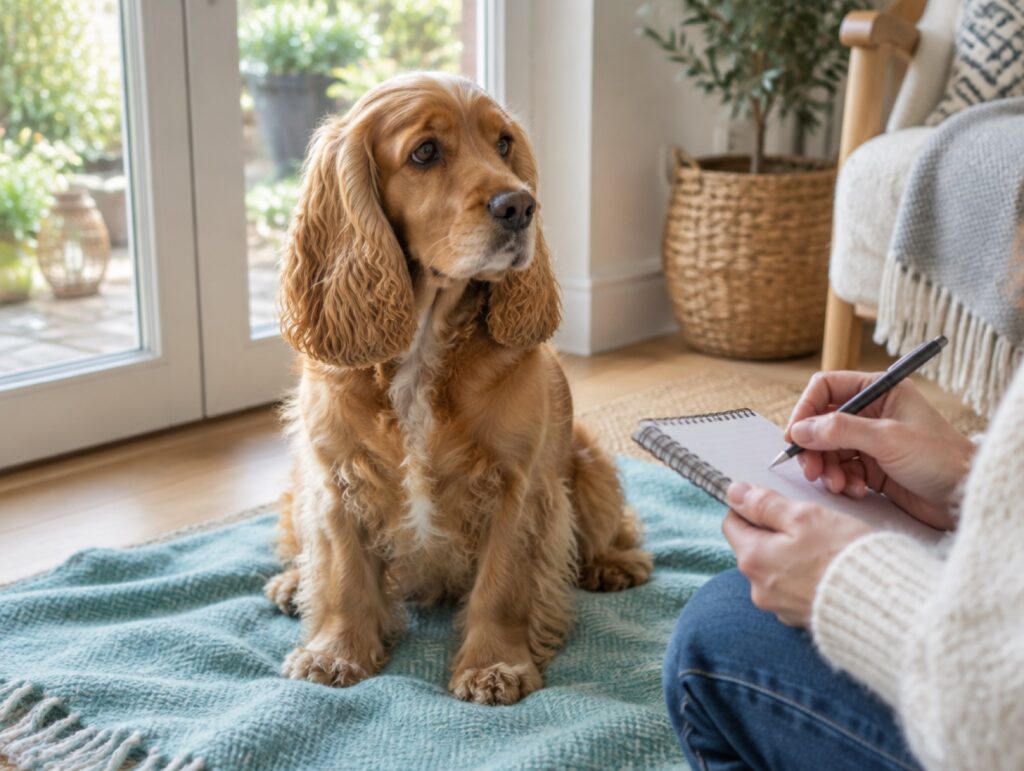
You most often find mucus in your dog’s stool when you pick up the poop in a bag: a glossy, clear or whitish coating, sometimes as small smears, sometimes like jelly. A little mucus also appears in a healthy dog. A larger amount, mucus several days in a row or mucus with other signs shows that something is going on in the gut. The same applies to mucus-coated stool, diarrhoea with mucus and mucus and blood in the stool: what matters is the amount, how long it lasts and the accompanying signs.
- Mucus is the gut’s natural lubricant, and a healthy dog occasionally passes a small amount (Vetster, PetMD).
- A larger amount of mucus together with frequent straining and small portions is the typical picture of colitis, that is, inflammation of the large bowel (Merck Veterinary Manual).
- Mucus with blood, black stool, vomiting, lethargy, belly pain or mucus in a puppy are reasons to call your vet straight away.
- The cause is often a change of food, stress, parasites (such as giardia or whipworms), colitis or chronic bowel disease. You cannot tell them apart at home.
What is mucus in a dog’s stool and when is it normal?
Mucus in stool is a slimy, glossy substance produced by the lining of the gut. It helps stool pass through the end of the bowel. According to the veterinary site Vetster, a healthy dog occasionally passes a small amount of mucus, and according to the veterinary site PetMD, a little mucus is no reason to panic.
A thin glossy coating on otherwise firm stool in a dog that is lively, eats, drinks and does not vomit is usually normal. A large amount of mucus, or mucus that keeps coming back, is no longer normal. According to Vetster it is a reason for an examination even if the dog looks well, and PetMD advises calling your vet even after a single case with a lot of mucus. The amount of mucus does not match the seriousness of the illness (Vetster): a lot of mucus does not have to mean a severe disease, and the reverse.
Colour and consistency are covered in the article Dog poop: colour, shape and consistency.
When should you see a vet straight away about mucus in a dog’s stool?
Call your vet straight away if the mucus comes together with blood, black stool or signs of general illness. Black tarry stool is acute even if the dog is otherwise lively. The article Blood in dog poop: when to see a vet straight away and when within 24 hours covers it in detail.
- Mucus together with blood in the stool, or black, tarry and sticky stool.
- Mucus together with vomiting, lethargy, weakness, fever, a painful or tense belly, or refusing food or water.
- Pale gums or collapse.
- Mucus in a puppy, especially one that is unvaccinated or incompletely vaccinated, and in an old or ill dog.
- The dog strains in vain or passes only mucus and nothing else.
- You suspect the dog has eaten a foreign object, a poison or medicines.
If an adult dog is lively, eats, drinks, does not vomit and the mucus is only a thin coating, watching is enough. Call your vet and arrange an examination if the mucus lasts longer than two days, comes back, or there is a lot of it, even if only once (PetMD). The two-day limit is a rule of thumb from our editors, the same as for diarrhoea in an adult dog, not a conclusion of a study.
What are the most common causes of mucus in a dog’s stool?
There are several causes and you cannot tell them apart from a distance. The Merck Veterinary Manual states that colitis can be triggered by infections (bacteria, parasites, fungi), injury, kidney disorders and allergies, and that in most cases the cause remains unknown.
- Irritation of the large bowel and a change of food. New food, a treat or table scraps can irritate the gut. According to PetMD, a sudden change of food can lead to mucus in the stool.
- Stress. VCA Animal Hospitals lists stress colitis among the main causes of large bowel diarrhoea, and according to VCA most dogs are fine within three to five days. But do not wait five days: if the mucus lasts longer than two days, call your vet. More in the article Stress diarrhoea in dogs.
- Giardia. Giardia are single-celled intestinal parasites that move using flagella. According to the Companion Animal Parasite Council (CAPC), most infections have no signs, but in illness the stool may contain mucus.
- Whipworms. The whipworm (Trichuris vulpis) is an intestinal worm that lives mainly in the caecum. According to CAPC, many infections have no signs, but some cause inflammation with diarrhoea in which there are streaks of mucus and fresh blood. According to CAPC, 74 to 90 days pass from swallowing an infectious egg to new eggs appearing in the stool, so a dog can have problems before a stool test detects them.
- Colitis. It shows as frequent straining, small portions of stool, mucus and sometimes fresh blood (Merck Veterinary Manual).
- Chronic bowel disease. In chronic enteropathy the problems last for weeks and come back. According to the Merck Veterinary Manual, the short-term prognosis of chronic colitis is good, but complete resolution without a return of the problems is unlikely and long-term care is often needed.
According to the Merck Veterinary Manual, vomiting and weight loss are unusual in colitis and appear rather with small bowel problems. Have mucus with vomiting or weight loss examined.
What does mucus plus another sign mean? A table for quick orientation
What matters is what accompanies the mucus. The table is a rough overview, not a diagnosis.
| Mucus and another sign | What it may mean | How fast to act |
|---|---|---|
| A thin glossy coating on firm stool, dog lively, eating and drinking | The gut’s natural lubricant or mild irritation (Vetster, PetMD). | Watch and take a photo. Call your vet if the mucus lasts longer than two days or comes back. |
| Mucus with soft stool, frequent straining, small portions, dog lively | Typical picture of colitis, inflammation of the large bowel (Merck Veterinary Manual). | Call your vet and arrange an examination. Go straight away if your dog gets worse. |
| Mucus after a change of food, a new treat or stress, dog otherwise lively | Gut irritation or stress colitis, which clears up in most dogs within 3 to 5 days (VCA). | Watch. If the mucus lasts longer than two days, call your vet. |
| Mucus with red streaks or drops of blood | Colitis, parasites, more severe irritation of the lining. | Call your vet straight away. See the article on blood in dog poop for what to do. |
| Mucus and black, tarry stool | Digested blood from the upper digestive tract. | Straight away, even if the dog is otherwise lively. |
| Mucus with vomiting, lethargy, belly pain, refusing water | General illness, not only a large bowel problem. | Straight away. Your dog can dehydrate quickly. |
| Mucus that keeps coming back for weeks, with weight loss or soft stool | Parasites, chronic enteropathy or another bowel disease. | Book an examination within a few days, do not wait for improvement. |
| Mucus in a puppy’s stool, even if the puppy is lively | Parasites such as giardia or whipworms, infection, change of food. | Call your vet straight away. With vomiting, lethargy, blood or refusing food, go straight there. |
| Jelly-like stool, that is, a large amount of mucus like jelly, or the dog strains and passes only mucus | Marked irritation or inflammation of the large bowel. | Call your vet straight away, especially if there is straining with no result. |
Why is mucus in a puppy’s stool more serious?
Mucus in a puppy’s stool is a reason to call your vet straight away, because a puppy has small reserves of fluid and weakens faster than an adult dog. Vetster states that puppies, old dogs and dogs with another illness are at higher risk of a more serious course, and PetMD advises talking to a vet immediately for very young dogs.
Because of intestinal parasites, CAPC recommends testing a puppy’s stool at least four times in its first year, and an adult dog at least twice a year. An unvaccinated puppy with diarrhoea may have parvovirus, in which there is also a lot of mucus in the stool (VCA). So call before you arrive, so the clinic can prepare.
What should you watch for and prepare before you call the vet?
Write down what you see and do not try anything at home. A good description helps your vet decide how urgent it is.
- Photograph the poop. A photo shows the mucus, colour and any blood better than a description.
- Collect a fresh sample. A clean pot or a tightly sealed bag, kept in the fridge away from food until you take it in. Giardia and whipworms are shed intermittently, so your vet may want samples from several days (CAPC).
- Write down how many times your dog pooped. Frequent straining and small portions point to the large bowel (Merck Veterinary Manual).
- Write down what your dog ate. New food, treats, bones, rubbish, table scraps. Mention stress too, such as a move or a trip.
- Watch for other signs and prepare documents. Vomiting, lethargy, drinking, appetite, belly pain, weight loss. For a puppy, bring the vaccination card and worming records.
Do not give any medicines from the home medicine cabinet or herbs, and do not start a diet on your own. The diet your vet may recommend is described in the article Bland diet for dog diarrhoea, and a general overview is in the article Diarrhoea in dogs.
What will the vet do if a dog poops mucus?
The vet will ask about the course, feeding and vaccination, examine the dog including a rectal examination, and test the stool, among other things by flotation for parasites and a smear for giardia (Merck Veterinary Manual).
If the problems persist, blood tests, an ultrasound or X-ray of the belly and possibly a colonoscopy with samples of the lining follow. For stable dogs the Merck Veterinary Manual describes a diet trial: an easily digestible, high-fibre or hypoallergenic diet that the dog gets exclusively for at least two weeks. If whipworms are suspected, it recommends worming even with a negative sample, because a single negative sample does not rule out infection. Treatment depends on the cause.
Is mucus in a dog’s stool linked to the microbiome and fibre?
Yes. Mucus is made in the gut lining and the most bacteria live in the large bowel: according to the review by Pilla and Suchodolski (2020), their number and diversity grow towards the large bowel. The bacteria produce short-chain fatty acids (acetate, propionate and butyrate). According to the review, butyrate is the preferred source of energy for cells of the large bowel, and the lining in turn produces mucus, which feeds beneficial bacteria (Pilla and Suchodolski, 2020).
In dogs with chronic bowel disease, the review describes reduced diversity of bacteria in stool and a loss of some genera, such as Faecalibacterium or Blautia. The authors point out that studies tend to be small and the results should be confirmed by larger groups. This is an association, not the cause of the mucus in your dog.
Fibre is food for these bacteria: according to the review, fibre from potatoes, soy hulls and inulin fructans increased the production of short-chain fatty acids in dogs. The Merck Veterinary Manual states that fibre improves diarrhoea in many animals with colitis, but VCA notes that some dogs do better with less fibre. So do not add it on your own when there is mucus. More in the articles Fibre for dogs and Dysbiosis in dogs.
Frequently asked questions
Is mucus in a dog’s stool normal?
A small amount of mucus can appear even in a healthy dog, because mucus is the gut’s natural lubricant (Vetster, PetMD). A thin glossy coating on otherwise firm stool in a lively dog that eats and does not vomit is usually normal. A large amount, repeated mucus or mucus with blood, vomiting or lethargy belongs with a vet.
What does mucus-coated stool mean?
Mucus-coated stool is a firmer poop with a glossy, clear or whitish coating. As a one-off in a small amount it can be normal, for example after a change of food. If the coating lasts longer than two days, comes back or there is a lot of it, call your vet and arrange an examination. If blood, vomiting or lethargy join in, call your vet straight away.
Why does my dog have mucus in the stool but no diarrhoea?
Mucus can also appear on firm stool, for example with mild irritation of the large bowel after a change of food or under stress. Stress colitis clears up in most dogs within 3 to 5 days (VCA). If the mucus lasts longer than two days or repeats, call your vet, because parasites may be the cause too.
What does mucus and blood in a dog’s stool mean?
Mucus together with fresh blood is typical of inflammation of the large bowel, colitis (Merck Veterinary Manual). But whipworms or another cause can bring it on too. Blood in the stool is always a reason to contact your vet, and with a larger amount, vomiting or lethargy, go straight away. You will find more in the article Blood in dog poop.
My dog has diarrhoea with mucus, what should I do?
Mucus in diarrhoea points mainly to the large bowel, and the Merck Veterinary Manual lists it among the typical signs of colitis. Offer a lively adult dog fresh water and call your vet if the diarrhoea lasts longer than 24 to 48 hours or gets worse. With blood, vomiting or lethargy call straight away, and for a puppy too. You will find the procedure in the article Diarrhoea in dogs.
What does mucus in a puppy’s stool look like and is it dangerous?
Mucus looks the same in a puppy as in an adult dog: a glossy, clear or whitish coating. But it is more serious, because a puppy loses fluids quickly and is at risk of parasites or parvovirus. Call your vet straight away and have a photo and a stool sample ready. With vomiting, blood or lethargy, go straight there.
Should I give my dog probiotics or human medicines for mucus in the stool?
No. Human medicines can harm a dog, and probiotics neither explain the cause of the mucus nor replace an examination. According to the Merck Veterinary Manual, the evidence for their benefit in colitis is mostly only anecdotal. Call your vet first, describe what you see and leave the use of any products to their decision.
Sources
- Pilla R, Suchodolski JS (2020). The Role of the Canine Gut Microbiome and Metabolome in Health and Gastrointestinal Disease. Frontiers in Veterinary Science 6:498. doi.org/10.3389/fvets.2019.00498
- Merck Veterinary Manual. Colitis in Small Animals. merckvetmanual.com
- VCA Animal Hospitals. Colitis in Dogs. vcahospitals.com
- Companion Animal Parasite Council. Giardia. capcvet.org/guidelines/giardia
- Companion Animal Parasite Council. Whipworm (Trichuris vulpis). capcvet.org/guidelines/trichuris-vulpis
- VCA Animal Hospitals. Parvovirus in Dogs. vcahospitals.com
- Vetster. Mucus in the Stool in Dogs. vetster.com
- Coates J (PetMD, 2024). Mucus in Dog Poop. petmd.com
This article is educational and does not replace a veterinary examination. If you are not sure, ask your vet.
This article was proofread with the help of AI. This is a translation from Czech, so it may contain inaccuracies.