Blog · Digestion
Dog stomach gurgling: when it is normal and when not
Stomach gurgling in dogs and puppies is usually normal digestion, for example when hungry. Watch for vomiting, diarrhoea, a swollen belly or no appetite.
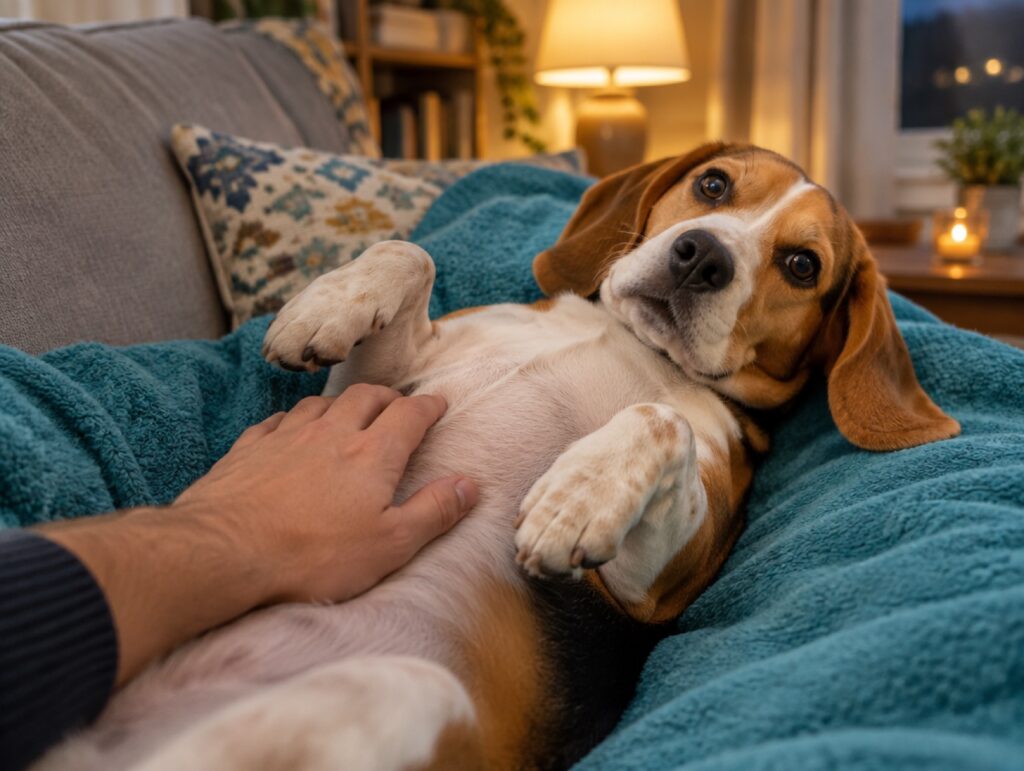
You are lying on the sofa in the evening when a long gurgle suddenly rolls out of your dog’s tummy, as if someone had turned on a tap. Stomach gurgling in dogs sounds funny, but it can also scare you, especially when vomiting joins in or your dog refuses food. Most of the time it is just an ordinary digestion sound. That goes for puppies too: a puppy’s gurgling tummy is usually just digestion. I will show you how to tell when calm is enough and when it is time to call the vet.
- Stomach gurgling in dogs is a sound made when gas and gut contents move through the digestive tract. The technical term is borborygmi.
- On its own, gurgling is usually normal, for example when your dog is hungry or after a meal. According to VCA, though, excessive gurgling can signal a problem.
- What happens around the sound matters more than the sound itself: vomiting, diarrhoea, loss of appetite, weight loss or pain are reasons to see the vet.
- A swollen, hard belly with fruitless attempts to vomit is an emergency, especially in a large dog. Call your vet straight away.
What is stomach gurgling in dogs?
Stomach gurgling in dogs, technically borborygmi, is a sound made when gas and gut contents move through the digestive tract. VCA Animal Hospitals links borborygmi to gas in the intestines, describes them as digestive-system noises that can sometimes be heard across a room, and says that together with burping and passing wind they can be normal.
The gut contracts during digestion and pushes its contents along. It contracts on an empty stomach too, which is why a dog’s tummy often rumbles in the morning before breakfast. Is your dog’s gurgling louder than it used to be? Notice exactly when it happens.
When is stomach gurgling in dogs normal?
Gurgling is usually normal when your dog is otherwise lively, eats and drinks normally and has normal poop. The sound alone says nothing about whether the gut is healthy. What matters is your dog’s overall condition.
- Hunger. The stomach and gut contract even when empty, and the gas inside can be heard. A dog’s tummy may then rumble before feeding, for example.
- After a meal. Digestion is running at full speed and the gut is active.
- After play and running. When moving, a dog swallows more air. VCA says swallowed air is probably the biggest source of intestinal gas and that both exercise and fast eating increase it.
- Gurgling at night. In the quiet, digestion sounds are simply audible. If your dog does not wake up, does not vomit and wants to eat in the morning, it is usually ordinary digestion.
What are the common causes of stomach gurgling in dogs?
Common causes of gurgling are an empty stomach, fast eating with swallowed air, a change of food, unsuitable food and excessive gas production. Most of them relate to what and how your dog eats.
An empty stomach
With a long gap between meals, a dog goes a long time without food. If a dog fed once a day gurgles mainly before mealtime, it may help to split the daily ration into two or three smaller portions. The American College of Veterinary Surgeons (ACVS) also recommends two or three smaller portions instead of one large one, because of the risk of gastric torsion.
Fast eating and swallowed air
A dog that gulps down its food swallows a lot of air along with it, and that air then travels through the gut. VCA says fast eating increases air swallowing. A slow bowl or a snuffle mat will slow the pace.
A change of food and unsuitable food
The gut gets used to the composition of the food, and a quick change throws its activity off. The result is often more gas, gurgling and sometimes soft stool. How to do it gradually is described in the article Switching dog food: a 7 to 10 day plan. The gut reacts in a similar way to table scraps, fatty bits or something picked up on a walk. You can find what harms your dog in the article What dogs must not eat.
Gas, the microbiome and fermentation
Gas in the gut comes mainly from swallowed air and from the activity of gut bacteria. VCA says that bacteria in the large intestine break down (ferment) carbohydrates and some types of fibre, which contributes to gas production. Fermentation is a normal part of digestion and it produces more than just gas. According to the review by Pilla and Suchodolski (2020), gut bacteria produce short-chain fatty acids that nourish the cells of the gut lining, and some types of fibre increase their production in dogs. In some dogs, though, VCA says fibre can contribute considerably to excessive gas. The share of certain plant ingredients in the food may also play a role (VCA mentions soybean meal and peas, for example). You can find more in the articles Gas in dogs and Dog gut microbiome.
What does gurgling together with another sign mean?
Gurgling on its own rarely tells you much; the other signs are what matter. The table is only a guide. It does not determine the cause and does not replace an examination.
| Gurgling and … | What it may mean | What to do |
|---|---|---|
| an otherwise lively dog that eats and drinks | Ordinary digestion, hunger or swallowed air | Watch, consider smaller, more frequent portions and slower eating |
| gas, a lot of wind | More gas from fibre or certain ingredients, fast eating | Slow down eating, pay attention to the food, see Gas in dogs |
| diarrhoea or soft stool | Irritated gut, change of food, unsuitable food, infection or parasites | Keep water always at hand, watch your dog’s condition, see Diarrhoea in dogs. If it lasts longer or gets worse, see the vet |
| your dog is not eating | Upset stomach, pain, illness or a foreign object | If it lasts longer than a day, book a vet visit. A puppy or senior straight away |
| vomiting | Irritated stomach, unsuitable food, but also more serious causes | See Dog vomiting. If it is repeated, see the vet |
| weight loss | Longer-term gut problems, problems with absorption or another illness | Examination at the vet (VCA lists weight loss with excessive gas as a reason for a visit) |
| pain, a swollen hard belly, restlessness | A possible acute problem, in a large dog also gastric torsion | Call your vet straight away, see the red box below and the article Bloated belly in dogs |
- The belly is swollen and hard as a drum.
- Your dog keeps trying to vomit, retching, but nothing comes out.
- It is restless, cannot lie down, drools heavily or breathes fast and with difficulty.
- There is blood in the vomit or the stool, or the stool is black and tarry.
- Your dog vomits repeatedly, is lethargic, weak or collapses.
- The belly is painful, your dog whimpers or will not let you touch it.
A swollen belly with fruitless retching and restlessness, especially in a large dog, may be gastric torsion. According to VCA it requires veterinary care within minutes to a few hours. Do not wait: call your vet or the emergency clinic immediately and set off, so they can prepare for you.
Why is gastric torsion so dangerous in large dogs?
Gastric torsion (technically gastric dilatation and volvulus, GDV) is a condition in which the stomach fills with gas, twists and blocks both its entrance and exit. According to VCA it is one of the most serious conditions in dogs that is not caused by an injury, and surgery is needed after stabilisation. Figures for mortality differ: ACVS gives around 15 per cent, VCA gives 10 to 45 per cent even in relatively uncomplicated cases, and the Merck Veterinary Manual gives 20 to 45 per cent in treated dogs. Both ACVS and the Merck Veterinary Manual list signs lasting longer than 6 hours among the risk circumstances.
It most often threatens large breeds with a deep chest. VCA names, for example, Great Danes, St Bernards, Weimaraners, Dobermanns and setters, but any dog can be affected. For dogs over 45 kilograms, VCA gives a lifetime risk of around 20 per cent. VCA lists feeding once a day, fast eating, thinness, cases in relatives, a fearful or nervous temperament and middle to older age among the risk factors. According to VCA, exercise after a large meal or after drinking a large amount of water can also increase the risk.
The typical signs are restlessness, drooling, fruitless attempts to vomit and a growing belly. You will not mistake it for ordinary gurgling. If you see this combination, do not try home remedies. You can find more about why the belly swells and what to do in the article Bloated belly in dogs.
Why does my puppy’s tummy gurgle?
A puppy’s gurgling stomach is usually the same digestion sound as in an adult dog: puppies gulp, swallow air, get hungry between meals and have lively guts. If your puppy is playful, eats, drinks and has normal poop, watching it is enough.
With a puppy, though, more caution is called for. A small body quickly loses fluids and energy, so do not just wait when gurgling comes with diarrhoea, vomiting, lethargy or refusing food. Do not put a swollen, hard or painful puppy belly down to “worms” or “growing”, and contact your vet straight away. You can find details about puppies in the article Puppy diarrhoea.
What if my dog’s tummy gurgles and it eats grass?
Eating grass is common behaviour in dogs and does not have to be linked to gurgling. Whether grass helps the stomach or is just a habit and a taste, scientists do not know for certain. If your dog occasionally nibbles a few blades, is otherwise lively and does not vomit, there is usually nothing to worry about.
It is suspicious when your dog gulps down grass repeatedly and in large amounts, drools, licks itself, vomits, or when diarrhoea or loss of appetite joins in. In that case also watch for a hard swollen belly, and call your vet if you see warning signs. Why dogs eat grass and what to do about it is covered in the article Why do dogs eat grass?
What can you do at home when your dog’s tummy gurgles?
If your dog is lively and has no other signs, simple changes to feeding and routine usually help. With warning signs, none of this replaces the vet.
- Split the portions. Two or three smaller portions a day instead of one large one. VCA says more smaller meals can limit gas, and ACVS recommends them because of the risk of gastric torsion.
- Slow down eating. Use a slow bowl, a snuffle mat or a feeding toy. According to VCA, slower eating helps reduce the amount of swallowed air.
- Let your dog settle after a meal. Do not let your dog into wild play straight after a large meal. According to VCA, exercise after a large meal can increase the risk of gastric torsion.
- Change food gradually. Introduce new food following the plan in the article Switching dog food, not overnight.
- Watch what your dog picks up. Scraps, rubbish and things from the ground are a common trigger of problems.
- Keep notes. Write down when the gurgling comes (before a meal, after a meal, at night), what the poop looks like and how your dog behaves.
Do not give your dog human medicines for gas or any other medicines on your own. What is safe for people may not be safe for dogs.
When should you not ignore stomach gurgling in dogs?
Talk to your vet when the gurgling lasts several days, keeps coming back or is very loud, and diarrhoea, weight loss, vomiting or reduced appetite join in. VCA says that excessive gas together with weight loss or diarrhoea may point to a more serious problem and is a reason to visit the vet.
Take your notes to the appointment. A fresh poop sample in a clean bag can save your vet time. The cause is often found not by the sound but by an examination, blood tests or a stool analysis. If the problems keep coming back, also read the general overview Digestive problems in dogs.
Frequently asked questions
Is it normal for a dog’s tummy to gurgle?
Yes, usually it is. Gurgling is the sound of gas and fluids in the gut and it occurs in healthy dogs, for example when hungry or after a meal. According to VCA, borborygmi can be normal, but excessive gurgling can signal a problem. The other signs decide: vomiting, diarrhoea, weight loss, pain or loss of appetite.
Is it normal for a puppy’s tummy to gurgle?
Mostly yes, puppies swallow air and their digestion works at full speed. If your puppy is lively, eats and has normal poop, it is usually an ordinary digestion sound. With diarrhoea, vomiting, lethargy or refusing food, contact your vet soon, because a puppy loses fluids quickly.
My dog’s tummy gurgles and it eats grass, what is going on?
Eating grass is common behaviour in dogs and does not have to be linked to gurgling. Occasionally nibbling grass without other signs is usually harmless, but scientists do not know the exact reason. If your dog gulps down grass repeatedly, vomits, drools, or diarrhoea and loss of appetite join in, book a vet visit. You can find more in the article Why do dogs eat grass?
Why does my dog’s tummy gurgle at night?
Most often because the house is quiet and the normal digestion sounds are simply audible. An empty stomach can add to it if your dog’s last meal was long ago, or gas after an evening meal. If your dog does not wake up, does not vomit and eats in the morning, there is no reason to worry. With pain or restlessness, call your vet.
Why does my dog’s tummy gurgle and it is not eating?
Gurgling combined with refusing food can mean an upset stomach, pain, unsuitable food or illness. If your dog has not eaten for more than a day, book a vet visit. For a puppy, a senior and a dog with a chronic illness, do not hesitate and get in touch straight away, especially when vomiting, weakness or a painful belly joins in.
Is gurgling related to flatulence?
Yes, both come from gas in the gut. Gas is created by swallowing air and by the activity of gut bacteria, and it makes sounds as it moves through the gut. If your dog passes a lot of wind and gurgles, it helps to slow down eating, split the portions and look at the composition of the food. You can find more in the article Gas in dogs. With weight loss or diarrhoea, go to the vet.
What if the gurgling comes with diarrhoea?
Gurgling together with diarrhoea usually means an irritated gut, and a dog with diarrhoea loses fluids. Offer fresh water and watch your dog. In a lively adult dog the problems often clear up within a few days. With blood in the stool, repeated vomiting, lethargy, and in a puppy or senior, call your vet straight away. You can find details in the article Diarrhoea in dogs.
Can stomach gurgling mean gastric torsion?
Gurgling alone cannot. Gastric torsion shows itself as a swollen hard belly, fruitless attempts to vomit, restlessness and drooling, especially in large breeds with a deep chest. According to ACVS it is a rapidly progressing condition that requires immediate veterinary care, and dogs with signs lasting longer than 6 hours do worse. If you see these signs, do not wait and call your vet straight away.
Sources
- VCA Animal Hospitals. Dogs and Gas (intestinal gas, flatulence, borborygmus). vcahospitals.com/know-your-pet/dogs-and-gas
- VCA Animal Hospitals. Gastric Dilatation and Volvulus (GDV) in Dogs. vcahospitals.com/know-your-pet/gastric-dilatation-and-volvulus-in-dogs
- American College of Veterinary Surgeons (ACVS). Gastric Dilatation-Volvulus. acvs.org/small-animal/gastric-dilatation-volvulus
- Winkler KP (2025). Gastric Dilation and Volvulus in Small Animals. Merck Veterinary Manual. merckvetmanual.com/digestive-system/diseases-of-the-stomach-and-intestines-in-small-animals/gastric-dilation-and-volvulus-in-small-animals
- Pilla R, Suchodolski JS (2020). The Role of the Canine Gut Microbiome and Metabolome in Health and Gastrointestinal Disease. Frontiers in Veterinary Science 6:498. doi.org/10.3389/fvets.2019.00498
This article is educational and does not replace a veterinary examination. If you are not sure, ask your vet.
This article was proofread with the help of AI. This is a translation from Czech, so it may contain inaccuracies.